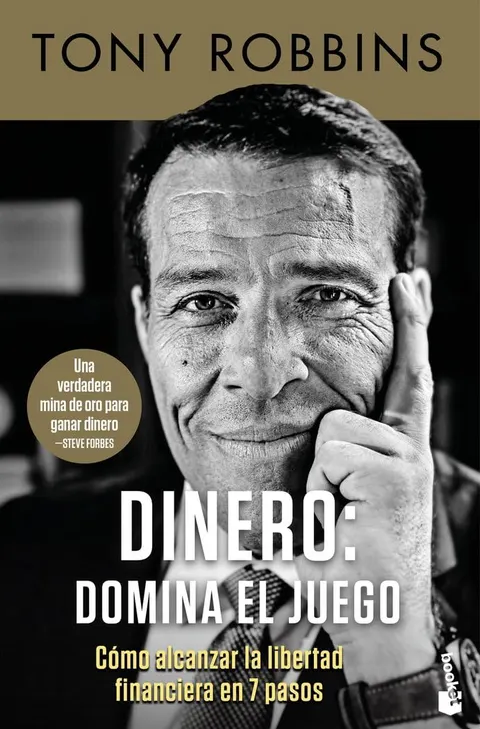
Cover of Money: Master the Game
Personal finance

Money: Master the Game

7 Simple Steps to Financial Freedom

★★★★☆ No ratings 1 min read

"Money: Master the Game" arrives with an ambitious premise: Tony Robbins interviewed fifty of the world's most influential investors and set out to synthesize their insights into an actionable plan for the individual investor.

Affiliate CTA preview · enabled with monetization (phase 5).

Tony Robbins interviews the world's most influential investors — Ray Dalio, Warren Buffett, Jack Bogle, Carl Icahn — and synthesizes their strategies into a seven-step financial plan for individual investors. Comprehensive and practical, it covers everything from savings basics to advanced portfolio management.

Our review

"Money: Master the Game" arrives with an ambitious premise: Tony Robbins interviewed fifty of the world's most influential investors and set out to synthesize their insights into an actionable plan for the individual investor. The result is voluminous — over 600 pages — uneven, and in some respects genuinely valuable. The interviews with Ray Dalio, Jack Bogle, and Paul Tudor Jones contain reflections that are rarely found gathered in one place. Dalio's "All Weather" portfolio, popularized in this book, became a standard reference in the passive investing world. Where the book falters is in its second half: several recommendations for specific financial products drew criticism for potential conflicts of interest, and Robbins's motivational tone does not always match the rigor the subject matter demands. From a YMYL compliance perspective: the book presents information for educational purposes, but readers must distinguish between the ideas of the experts interviewed and the author's own recommendations, which carry a different character. As a synthesis of world-class investing philosophies, it has real value; as a personal financial planning guide, it demands critical reading.

Who it's for

For investors with a foundation who want access to the ideas of major global managers without reading them directly; not suitable as a sole financial planning guide.

Key takeaways

  • Real diversification means holding assets that do not move together across different market environments — not simply holding many assets.
  • Ray Dalio's All Weather portfolio aims to balance exposure to four economic environments: growth, recession, inflation, and deflation.
  • Compounded investment costs over decades can equal years of lost returns; choosing low-cost vehicles has significant impact.
  • The ability to maintain a strategy through downturns is more determinative of final outcomes than the choice of strategy itself.
Fact

Published in 2014, the book reached number one on the New York Times business books list in its launch week.

Topics Tony RobbinsinversióncarteraRay Dalioplanificación financiera