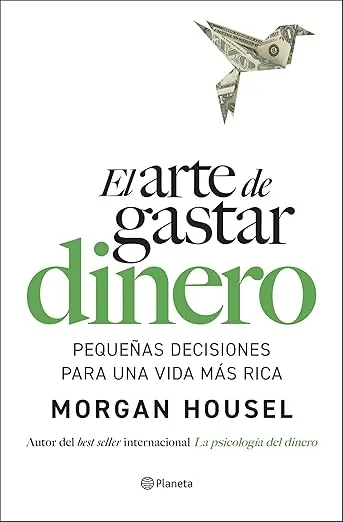
Cover of The Art of Spending Money: Simpler Choices for a Richer Life
New
Personal finance

The Art of Spending Money: Simpler Choices for a Richer Life

Timeless Lessons on Risk, Opportunity and Living a Good Life

★★★★☆ No ratings 1 min read

Morgan Housel returns with a question his previous book on the psychology of money left unanswered: what to do with money once accumulated?

Affiliate CTA preview · enabled with monetization (phase 5).

The spiritual sequel to The Psychology of Money. Housel explores the other side of money — not how to accumulate it but how to spend it in ways that generate lasting happiness. Short essays on envy, status, identity, time, and freedom propose a framework for spending decisions aligned with your values, not social expectations.

Our review

Morgan Housel returns with a question his previous book on the psychology of money left unanswered: what to do with money once accumulated? Where "The Psychology of Money" addressed how to think about saving, investing, and wealth, this book explores the less-traveled territory of how to spend well. The central argument is that spending that generates lasting happiness is radically different from the spending that marketing, advertising, and social pressure promote. Housel examines research on the psychology of wellbeing — hedonic adaptation, the value of experiences over objects, the paradox of too many options — and translates it into practical implications for how to use money to build a life worth living. The book arrives in 2025 and preserves the accessible prose and reflective tone that distinguish Housel from most personal finance authors. Its main weakness, as in his earlier work, is that the observations are sharp but the prescriptions are deliberately general: Housel illuminates the problem with more clarity than he offers specific solutions, which may leave readers with intellectual clarity but without a concrete plan.

Who it's for

For readers who already have established saving and investing habits and want to reflect on how spending relates to quality of life; this is not a budget management book.

Key takeaways

  • Hedonic adaptation neutralizes the pleasure of almost any material acquisition within weeks or months: objects satisfy less and for shorter periods than anticipated.
  • Spending on experiences, free time, and relationships generates more durable wellbeing than comparable spending on material goods.
  • Autonomy over one's own time is the scarcest thing money can buy, and it is consistently undervalued relative to visible possessions.
  • Spending well requires the same analytical rigor as investing well: most people spend far more time optimizing their portfolios than their expenditure.
Fact

Published in 2025, it is Housel's second book following "The Psychology of Money" (2020), which sold more than 4 million copies worldwide.

Topics Morgan Houselgastofelicidadvaloresdecisiones financieras