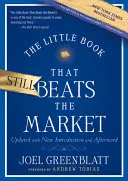
Cover of The Little Book That Beats the Market
Stock investing

The Little Book That Beats the Market

★★★★½ No ratings 1 min read

Joel Greenblatt built his reputation at Gotham Capital by generating annualized returns above 40% for over a decade, and "The Little Book That Beats the Market" is his attempt to distill that experience into something any investor can replicate.

Affiliate CTA preview · enabled with monetization (phase 5).

Joel Greenblatt presents his "magic formula": a systematic value investing strategy based on two simple metrics — return on capital (ROIC) and earnings yield. The book explains in accessible terms why buying good companies at reasonable prices works over the long term, and why most investors can't maintain the discipline to apply it.

Our review

Joel Greenblatt built his reputation at Gotham Capital by generating annualized returns above 40% for over a decade, and "The Little Book That Beats the Market" is his attempt to distill that experience into something any investor can replicate. The central idea is the "magic formula": a systematic screen that ranks companies simultaneously by return on capital employed and earnings yield. The thesis is that buying good businesses at reasonable prices, repeated with discipline over years, produces market-beating returns without requiring special talent. The book can be read in a few hours, is written with humor and accessible examples, and deliberately avoids technical jargon. Its greatest virtue is also its greatest limitation: simplicity. Greenblatt himself acknowledges the formula works "over the long run" but goes through periods of three or more years where it underperforms the index, and few real investors endure that wait without bailing out. The original 2005 context — particularly the interest rate environment — differs dramatically from today, raising legitimate questions about the ongoing validity of the proposed metrics. Valuable as an introduction to systematic value investing; insufficient as a sole reference for managing a real portfolio.

Who it's for

For readers who want to grasp the fundamentals of value investing without drowning in technical detail; not sufficient as a standalone guide for managing real wealth.

Key takeaways

  • Combining high return on capital with an attractive entry price is the core of systematic value investing.
  • Maintaining discipline during a strategy's underperforming periods is far harder in practice than the book implies.
  • Simple metrics have educational value but require sector and macroeconomic context the book does not provide.
  • A business's competitive moat — its ability to sustain high returns over time — is the factor no formula can replace.
Fact

Published in 2005, the book sold more than 300,000 copies in its first English edition and was translated into over twenty languages.

Topics fórmula mágicavalue investingROICinversión sistemáticaJoel Greenblatt