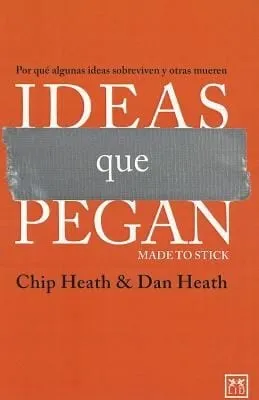
Cover of Made to Stick
Marketing & persuasion

Made to Stick

★★★★☆ No ratings 1 min read

The Heath brothers — Chip, a Stanford professor; Dan, a Duke researcher — started from an irritating asymmetry: urban legends, with no budget or author, survive for decades, while corporate messages backed by millions die on leaving the room.

Affiliate CTA preview · enabled with monetization (phase 5).

Why urban legends survive for decades while corporate presentations are forgotten in minutes. The Heath brothers distilled the six traits of memorable ideas into the SUCCES model: simple, unexpected, concrete, credible, emotional, stories. Both a rigorous analysis of communication that works and a practical manual for applying it.

Our review

The Heath brothers — Chip, a Stanford professor; Dan, a Duke researcher — started from an irritating asymmetry: urban legends, with no budget or author, survive for decades, while corporate messages backed by millions die on leaving the room. Dissecting hundreds of «sticky» ideas they found six recurring traits, summarized in the SUCCES acronym: simple (one core idea, not three), unexpected (break a pattern to capture attention), concrete (sensory images, not abstractions), credible (verifiable details or authority), emotional (make people feel, not just know), and stories (which work as mental simulation). The enemy running through the whole book is the «curse of knowledge»: whoever masters a subject no longer remembers how it sounds to someone who doesn't, and therefore communicates in the abstract. Each principle comes with memorable examples — from the «Don't Mess with Texas» campaign to Subway's Jared — and applicable exercises. For anyone who communicates — teaches, sells, writes, or presents — it is one of the few books in the genre whose advice actually gets used the next day.

Who it's for

For communicators, teachers, salespeople, and content creators who need their ideas understood and remembered; also useful for writing better about finance.

Key takeaways

  • The curse of knowledge is communication's enemy number one: knowing too much makes you forget how not knowing sounds.
  • Simple is not simplistic: it means finding the core of the idea and expressing it compactly, like a proverb.
  • Concrete sticks and abstract slides: «chicken wings» communicates; «value proposition optimization» does not.
  • Stories work as simulations: whoever hears a story mentally rehearses the action — something no list of facts achieves.
Fact

Chip Heath is a professor at Stanford's Graduate School of Business and Dan Heath a senior fellow at Duke; published in 2007, the book spent over two years on the BusinessWeek bestseller list.

Topics comunicaciónstorytellinghermanos Heathpersuasiónideas