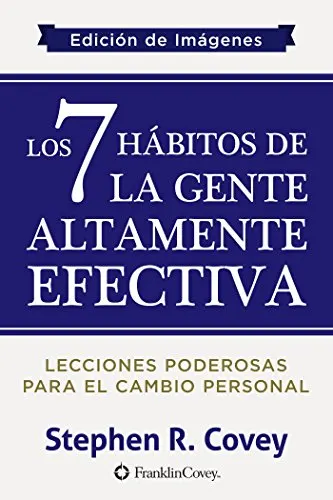
Cover of The 7 Habits of Highly Effective People
Bestseller
Strategy & life

The 7 Habits of Highly Effective People

la revolución ética en la vida cotidiana y en la empresa

★★★★½ 8.0/10 (7) 1 min read

Stephen Covey published this book in 1989, and it has since sold more than 40 million copies, making it one of the most influential personal development books of the twentieth century.

Affiliate CTA preview · enabled with monetization (phase 5).

The best-selling personal development book of the 20th century with over 40 million copies. Covey presents a timeless system of principles for integrity and effectiveness: be proactive, begin with the end in mind, put first things first, think win-win, seek first to understand, synergize, and sharpen the saw.

Our review

Stephen Covey published this book in 1989, and it has since sold more than 40 million copies, making it one of the most influential personal development books of the twentieth century. The central argument is that lasting effectiveness does not come from productivity techniques or surface-level skills but from character principles Covey calls paradigms. The seven habits are organized across three levels: the first three (be proactive, begin with the end in mind, put first things first) address private victory — self-mastery; the next three (think win-win, seek first to understand, synergize) address public victory — effectiveness with others; the seventh (sharpen the saw) is the habit of continuous renewal. What distinguishes this book from most self-help is its explicit grounding in ethical principles and the argument that character precedes personality as the foundation of genuine trust. The honest critique is that the book can feel formulaic for readers who have already internalized some of these principles through other paths, and its length occasionally works against its clarity. As a map of principles for effective living, however, it remains a difficult benchmark to surpass.

Who it's for

For readers seeking an ethically grounded framework for personal and professional effectiveness; less useful for those looking for quick productivity techniques.

Key takeaways

  • Proactivity does not mean constant activity — it means taking responsibility for your own responses to external stimuli.
  • "Beginning with the end in mind" means clarifying your success criteria before making daily decisions, not after.
  • Private victory — self-mastery — precedes and conditions effectiveness in all relationships with others.
  • Seeking first to understand before seeking to be understood transforms the quality of any difficult conversation.
Fact

Published in 1989, The 7 Habits has sold more than 40 million copies worldwide and was named the most influential business book of the twentieth century by Forbes magazine.

Topics Stephen Coveyhábitosproductividadefectividaddesarrollo personal