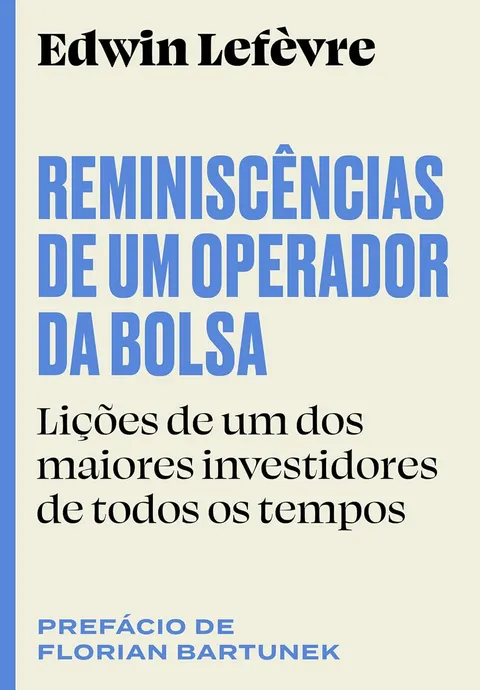
Cover of Reminiscences of a Stock Operator
Bestseller
Trading & technical analysis

Reminiscences of a Stock Operator

★★★★½ No ratings 1 min read

Edwin Lefèvre published in 1923 a novelization of the life of Jesse Livermore, the most celebrated speculator of the early twentieth century, and the result is one of the longest-lived books about financial markets in history.

Affiliate CTA preview · enabled with monetization (phase 5).

Published in 1923, this novelization of Jesse Livermore's life — the greatest speculator in Wall Street history — reveals timeless truths about market psychology, risk management, greed and fear cycles, and the mistakes that ruin even the best operators. The oldest and most influential trading book ever written.

Our review

Edwin Lefèvre published in 1923 a novelization of the life of Jesse Livermore, the most celebrated speculator of the early twentieth century, and the result is one of the longest-lived books about financial markets in history. The first-person novel format allows Livermore — under the fictional name Larry Livingston — to describe his mistakes, his arrogance, his bankruptcies, and his recoveries with an honesty that technical manuals never offer. The book's most enduring contribution is behavioral rather than technical: Livermore describes with precision the difference between "knowing" what is going to happen and "acting" accordingly, the temptation to average down losses, the danger of tips, and the difficulty of holding a winning position. What makes the book remarkable a century after publication is that the psychological dynamics it describes — euphoria, panic, overconfidence — are identical in today's markets. The obvious limitation is that the 1920s markets — with legal manipulation, bucket shops, and minimal regulation — differ structurally from today's markets, and some of the tactics described are now illegal.

Who it's for

For anyone interested in financial markets, especially traders; the narrative makes it accessible even for readers without prior technical background.

Key takeaways

  • Market knowledge without execution discipline is a self-defeating advantage.
  • Averaging down losses (adding to a losing position) is one of the most costly errors in speculation.
  • The best operators know when to do nothing: patience is an active position.
  • Markets do not forgive arrogance: periods of exceptional success often precede the greatest losses.
Fact

Published in 1923, the book has been continuously reprinted for more than one hundred years and appears on the required reading lists of hedge fund managers including Paul Tudor Jones.

Topics Jesse LivermoreespeculaciónhistoriapsicologíaWall Street clásico