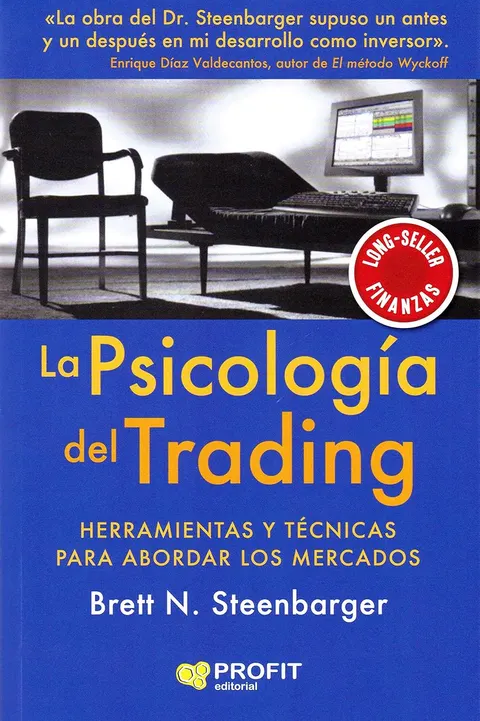
Cover of The Psychology of Trading
Trading & technical analysis

The Psychology of Trading

Herramientas y técnicas para abordar los mercados

★★★★☆ No ratings 1 min read

Brett Steenbarger is a clinical psychologist who has spent decades working with traders and institutional fund managers in the United States.

Affiliate CTA preview · enabled with monetization (phase 5).

Clinical psychologist Brett Steenbarger, who works with professional traders, argues that trading improvement comes primarily from deep work on emotional and behavioral patterns rather than more analysis. Combining cognitive-behavioral psychology, behavior-change techniques, and real trader case studies, he teaches how to identify self-sabotage patterns and break them in real time.

Our review

Brett Steenbarger is a clinical psychologist who has spent decades working with traders and institutional fund managers in the United States. «The Psychology of Trading» (2003) begins from a premise that distinguishes it in the genre: trading performance improvement comes primarily not from learning more technical analysis but from deep work on the emotional and behavioural patterns that sabotage execution. Steenbarger applies clinical psychology techniques — particularly brief therapy and cognitive-behavioural therapy — to the trading context, and does so concretely: he describes real, anonymised cases of traders he has worked with. The book identifies the main «altered states» that affect performance — overconfidence, paralysis from fear, post-win euphoria — and proposes specific interventions for each. The clinical approach is what sets this book apart: Steenbarger describes tested interventions, not abstract concepts. The limitation is that some techniques require sustained work over time; the book offers no easy shortcuts.

Who it's for

For traders who operate regularly and want to address their emotional and behavioural errors with solid, clinically grounded psychological tools.

Key takeaways

  • The emotional patterns that ruin trading are rarely random; they are usually learned responses that activate under specific stress conditions.
  • Solution-focused brief therapy can help identify and modify those patterns within a relatively short timeframe.
  • Keeping a record of emotional states during a trading session — not just of results — is the first step toward diagnosing the real problem.
  • High-profit periods can be as dangerous as losing streaks: post-win overconfidence generates systematic errors.
Fact

Brett Steenbarger published «The Psychology of Trading» in 2003 and has worked as a psychologist with traders at financial institutions in Connecticut, USA.

Topics Brett Steenbargerpsicología cognitivaautosabotajerendimientocoaching