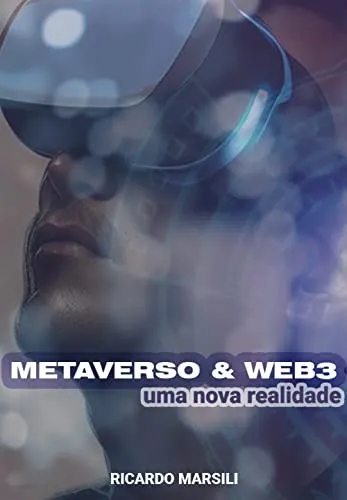
Cover of Web3 and the Metaverse
New
Crypto & blockchain

Web3 and the Metaverse

★★★★☆ No ratings 1 min read

Marc Vidal is among the most recognized technology communicators in the Spanish-speaking world, and this book reflects both his strengths and his constraints.

Affiliate CTA preview · enabled with monetization (phase 5).

Spanish tech economist Marc Vidal explores the future of the Internet and digital economy: what Web3 is and how it differs from Web2, the Metaverse's mechanics and real economic potential, the role of NFTs, DAOs, and tokens in the new digital economy, and how these developments will affect work, businesses, and investments in coming years.

Our review

Marc Vidal is among the most recognized technology communicators in the Spanish-speaking world, and this book reflects both his strengths and his constraints. The strength is accessibility: Vidal explains clearly what conceptually distinguishes Web3 from Web2, what decentralized digital ownership promises, and why the metaverse interests companies well beyond entertainment. The constraint is the speed of writing versus the speed of events: published in 2022 at the peak of metaverse enthusiasm driven by Facebook's rebranding to Meta, the book reached the market exactly as enthusiasm began to deflate. Several projects presented as emerging have since failed or lost relevance. That does not invalidate the conceptual framework — digital ownership, non-fungible tokens as verification mechanisms, decentralized governance — but it does require readers to separate durable ideas from specific examples that time has already judged. It works as a panoramic introduction, not as an investment decision guide, and should be read with that distinction explicit.

Who it's for

For non-technical readers wanting a broad introduction to Web3 and the metaverse from a Spanish-language perspective; it does not replace technical or current sources.

Key takeaways

  • Web3 proposes an internet model where users own their data and digital identities rather than being tenants of centralized platforms.
  • The metaverse is not a single technology but a convergence — virtual reality, blockchain, digital identity — whose real economic impact remains genuinely uncertain.
  • NFTs are not merely images: they are digital ownership verification mechanisms with potential applications in contracts, credentials, and rights management.
  • The gap between Web3's promise and actual adoption depends on unresolved problems in scalability, user experience, and regulation.
Fact

Published in 2022, the year Meta (Facebook) reported losses exceeding 10 billion dollars in its metaverse division, Reality Labs.

Topics Marc VidalWeb3MetaversoNFTsDAOs