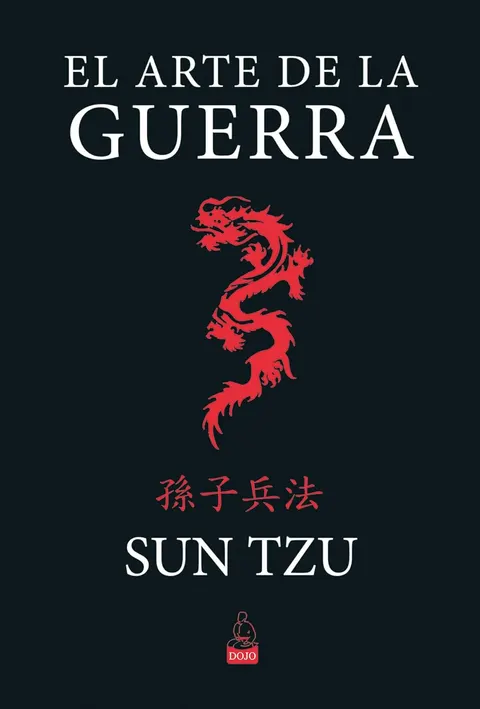
Cover of The Art of War
Bestseller
Strategy & life

The Art of War

★★★★½ No ratings 1 min read

Sun Tzu wrote thirteen chapters on warfare approximately 2,500 years ago, and the text continues to be cited in business schools, military academies, and boardrooms worldwide.

Affiliate CTA preview · enabled with monetization (phase 5).

The oldest and most influential strategic treatise in human history, written 2,500 years ago. Its thirteen chapters on planning, tactics, adaptation, and intelligence have been applied to business, investing, and negotiation with extraordinary results.

Our review

Sun Tzu wrote thirteen chapters on warfare approximately 2,500 years ago, and the text continues to be cited in business schools, military academies, and boardrooms worldwide. The first surprise on reading it directly is its brevity and density: there is no narrative, no illustrative anecdote, only distilled maxims summarizing principles of planning, logistics, adversarial psychology, and intelligence. The argument running through the entire text is that superior victory is achieved without fighting — through exhaustive knowledge of the terrain, the adversary, and oneself, and through constant adaptation to the real situation rather than to prior plans. The application to business is legitimate at the level of general principles — positioning, information advantage, resource management — but easily becomes superficial when maxims are extracted without context. The book's greatest value is not in the isolated quotes that circulate in PowerPoint presentations, but in its conception of knowledge as the fundamental competitive advantage: those who know the terrain, the adversary, and themselves before acting reduce the uncertainty they will face when acting. The composition date is uncertain and academically debated.

Who it's for

For readers interested in strategy, the history of military thought, and classical applications to the contemporary world; requires an annotated edition to extract full value.

Key takeaways

  • Superior victory is achieved before the battle: through planning, knowledge of the adversary, and selection of favorable timing and terrain.
  • Self-knowledge and knowledge of the adversary is the most fundamental competitive advantage and the hardest to fake.
  • Tactical adaptation to the real situation systematically outperforms rigid adherence to the original plan.
  • Information asymmetry — knowing more than the adversary — is more decisive than superiority in resources.
Fact

The exact composition date of The Art of War is unknown and academically debated; scholars place it approximately between the fifth and fourth centuries BC, during the Warring States period in China.

Topics Sun Tzuestrategiafilosofía orientaltácticaclásico antiguo