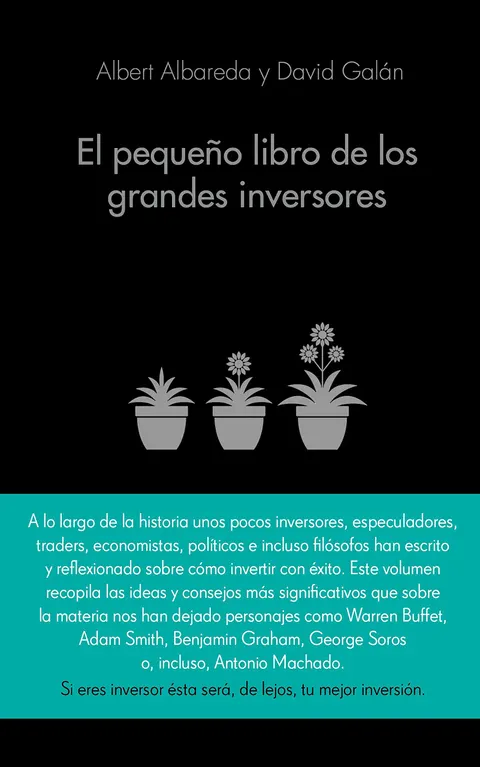
Cover of The Little Book of the Great Investors
Stock investing

The Little Book of the Great Investors

★★★★☆ No ratings 1 min read

The Little Book of the Great Investors by Albert Parés functions as a map of the most influential value and growth investing approaches of the twentieth and twenty-first centuries.

Affiliate CTA preview · enabled with monetization (phase 5).

Albert Parés distils the key lessons from history's greatest investors — Buffett, Munger, Lynch, Templeton, Klarman, Fisher, and more. For each investor, the book captures the core principles of their philosophy, memorable quotes, and the mental tools that made them exceptional.

Our review

The Little Book of the Great Investors by Albert Parés functions as a map of the most influential value and growth investing approaches of the twentieth and twenty-first centuries. For each investor studied — Buffett, Munger, Lynch, Templeton, Klarman, Fisher, and others — the author extracts the guiding principles with clear, pedagogical synthesis. The book's strength lies in its comparative dimension: by placing different philosophies in dialogue, readers can identify what the great investors share — discipline, long-term orientation, margin of safety, deep business knowledge — and where they diverge — tolerance for growth, portfolio concentration, universe of companies. The main limitation is inherent to the format: condensation requires simplification, and some investors inevitably receive a surface-level treatment. The book is an excellent entry point to investment literature but does not replace the primary sources — the investors' own letters, memoirs, or books. Written in Spanish with an accessible, educational approach, it fills a genuine gap in the Spanish-language financial bibliography.

Who it's for

For readers new to value investing or wanting a panoramic view of the sector's great thinkers; ideal as a guide to further reading, not as a standalone source.

Key takeaways

  • History's best investors share common principles: discipline, long-term vision, and respect for the price paid.
  • Each great investor has adapted the value philosophy to their own temperament, demonstrating there is no single correct path.
  • Understanding the differences between Lynch, Klarman, and Templeton helps investors identify which approach best fits their own profile.
  • Primary sources — letters, memoirs, original books — are essential reading after any synthesis like this one.
Fact

Published in 2019 by Deusto, it is one of the few value investing synthesis books originally written in Spanish by a Spanish author.