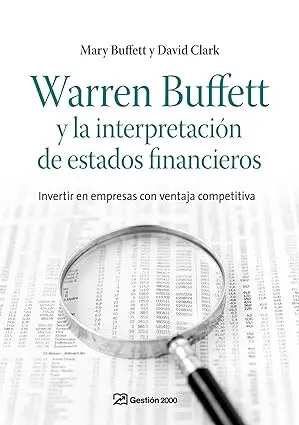
Cover of Warren Buffett and the Interpretation of Financial Statements
Stock investing

Warren Buffett and the Interpretation of Financial Statements

The Search for the Company with a Durable Competitive Advantage

★★★★½ No ratings 1 min read

If «Buffettology» teaches what to look for in a company, this book teaches where to find it in the numbers.

Affiliate CTA preview · enabled with monetization (phase 5).

Mary Buffett and David Clark teach you to read balance sheets, income statements, and cash flow statements through Warren Buffett's eyes — identifying which numbers matter, which signal a durable competitive advantage, and which should raise red flags. Uses Buffett's favourite companies as case studies throughout.

Our review

If «Buffettology» teaches what to look for in a company, this book teaches where to find it in the numbers. Mary Buffett and David Clark apply the same approach — extracting Buffett's analytical framework from his letters and interviews — to accounting analysis: how to read an income statement, a balance sheet, and a cash flow statement through the eyes of someone looking for durable competitive advantages, not just immediate profitability. The book's central argument is that companies with an economic moat leave a recognizable imprint in their financial statements: high and stable gross margins, significant research and development spending as a percentage of sales, low debt relative to earnings, and consistently positive free cash flow. The authors also identify the warning signals Buffett avoids: high debt, declining margins, and excessive capital expenditure required to sustain the competitive position. The book is brief and accessible — an advantage for beginners — but superficial in its technical treatment of accounting line items. It is better read as a complement to «Buffettology» than as a standalone work.

Who it's for

For investors who want to learn to read financial statements from a business quality perspective; useful as a practical introduction but not sufficient as complete accounting training.

Key takeaways

  • High and stable gross margins are the first indicator of competitive advantage in the income statement.
  • Free cash flow — net income minus capital expenditure — is the most honest indicator of a company's real value-generating capacity.
  • A company that requires heavy capital expenditure to maintain its competitive position has a fragile advantage, not a moat.
  • High debt relative to operating earnings is a warning signal that Buffett has systematically avoided in his acquisitions.
Fact

Published in 2008 by Mary Buffett and David Clark, the same author pair behind «Buffettology» (1997), with which it shares its methodological approach.