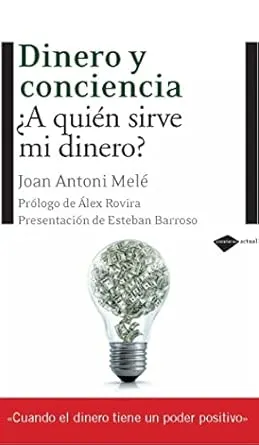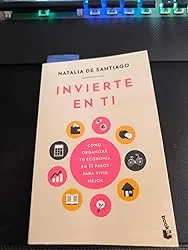
Cover of Invest with Little
New
Spanish authors

Invest with Little

Haz que tu dinero crezca

★★★★☆ No ratings 1 min read

Natalia de Santiago writes for a very specific reader: the Spanish earner who has some money sitting in a current account, suspects they should do something with it, and does not know where to start.

Affiliate CTA preview · enabled with monetization (phase 5).

Natalia de Santiago, author of "Invest in Yourself" and one of Spain's most popular financial educators, answers a fundamental question for millions: how to start investing with limited capital. She explains periodic small contributions (dollar-cost averaging), low-minimum investment products (index funds, ETFs, fractional shares), and how to design a progressive investment strategy.

Our review

Natalia de Santiago writes for a very specific reader: the Spanish earner who has some money sitting in a current account, suspects they should do something with it, and does not know where to start. The book's strength is precisely that alignment between target audience and tone: De Santiago assumes no prior financial knowledge, avoids unnecessary jargon, and understands that the primary obstacle for retail investors is not lack of information but paralysis in the face of too many options. The book covers the foundations any saver should grasp — compound interest, the difference between fixed and variable income, what an index fund is, and why most active managers do not beat the index over long periods — without detours into complexity that would not serve the intended reader. The limitation follows directly from the virtue: if you already have basic financial literacy, the book will feel too introductory. It is not aimed at experienced investors and makes no pretense of being so. It is the book many people in Spain needed to take a first step, written by someone who clearly understands the psychological and practical barriers that prevent them from doing so.

Who it's for

For Spanish savers with no investment experience who want to start with small amounts and without complexity; it adds little for those who already invest regularly.

Key takeaways

  • Compound interest works at any scale: starting early with small amounts consistently outperforms waiting to invest larger ones.
  • Most actively managed funds do not outperform their benchmark index over the long term, after fees.
  • A low-cost index fund is, for most retail investors, a better solution than the average available alternative.
  • Basic financial education requires neither advanced mathematics nor significant capital — it requires starting.
Fact

Published in 2022, it became one of the best-selling personal finance books in Spain that year, contributing to growing interest in index funds among Spanish retail investors.

Topics Natalia de Santiagopequeños inversoresdollar-cost averagingEspañafondos indexados