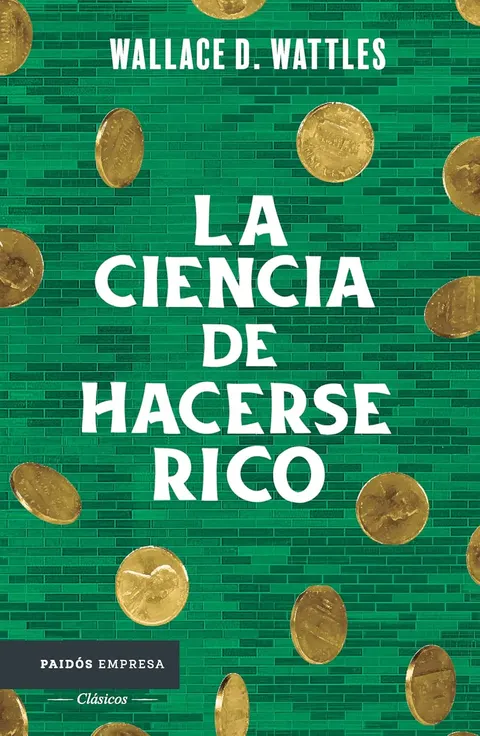
Cover of The Science of Getting Rich
Classics & history

The Science of Getting Rich

The Original Classic

★★★★☆ 2.0/10 (1) 1 min read

Published in 1910, «The Science of Getting Rich» is one of the founding texts of the English-language financial self-help genre.

Affiliate CTA preview · enabled with monetization (phase 5).

Written in 1910, this brief treatise by Wallace D. Wattles is one of the founding texts of financial self-help. Wattles argues that wealth is a matter of thinking and acting in a certain way — ideas that directly influenced the New Thought movement and later books like The Secret.

Our review

Published in 1910, «The Science of Getting Rich» is one of the founding texts of the English-language financial self-help genre. Wallace D. Wattles, a self-taught writer associated with the New Thought movement in the United States, argued that wealth is the result of applying certain principles consistently, in the same way that natural laws produce predictable outcomes. The book's core idea is that creative thinking — acting from a vision of what one desires rather than from a sense of lack — attracts material opportunities. Wattles blends metaphysics with pragmatism, insisting that positive thought must be paired with efficient action. Read with historical perspective, the book has genuine merit as a precursor to abundance-mindset thinking and was a declared influence on «The Secret» (2006). However, its conceptual framework has no empirical foundation, ignores socioeconomic structures entirely, and many of its claims are unfalsifiable by design. It is more a cultural and historical artefact than an actionable financial guide. Its brevity — under 100 pages — makes it a quick read for anyone wishing to locate the self-help genre at its origin.

Who it's for

For readers interested in the history and philosophical roots of financial self-help; not recommended as a practical finance guide.

Key takeaways

  • The book established the idea that wealth follows from a set of learnable principles, not from luck or birth circumstances.
  • Wattles insists that thought without action is ineffective: visualisation must be followed by concrete, efficient work.
  • The text mirrors the early twentieth-century New Thought movement's faith in individual will and universal abundance.
  • Its influence on later works like «Think and Grow Rich» and «The Secret» makes it a genealogical reference for the entire genre.
Fact

«The Science of Getting Rich» was published in 1910 and is in the public domain; it has been reprinted by dozens of publishers worldwide in the century since.

Topics Wattlespensamiento creativoNew Thoughtclásicomentalidad de riqueza