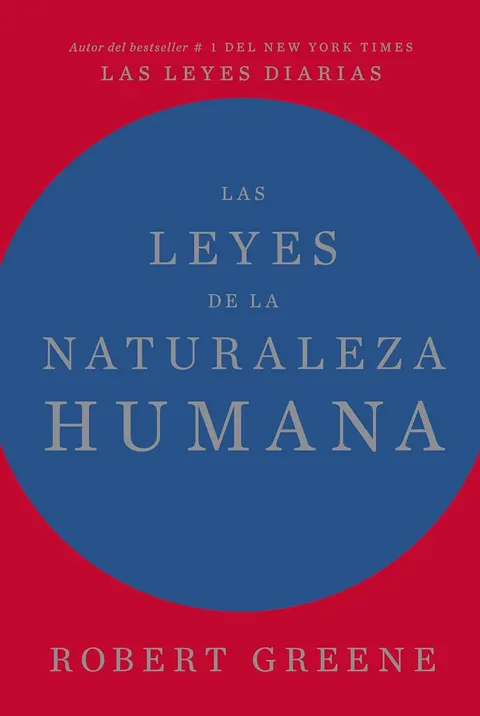
Cover of The Laws of Human Nature
Strategy & life

The Laws of Human Nature

★★★★½ No ratings 1 min read

«The Laws of Human Nature» is Robert Greene's most ambitious work — more than six hundred pages examining eighteen patterns of human behaviour, from narcissism and envy to irrationality and group conformity, through historical figures ranging from Pericles and Elizabeth I to Martin Luther King and Marcel Proust.

Affiliate CTA preview · enabled with monetization (phase 5).

Greene's most ambitious work: a 600-page treatise on the universal principles governing human behaviour, drawing from Pericles to Martin Luther King. He analyses the unconscious drives of irrationality, envy, narcissism, and conformity — and teaches strategies to recognise them in others and yourself for freer, more effective decisions.

Our review

«The Laws of Human Nature» is Robert Greene's most ambitious work — more than six hundred pages examining eighteen patterns of human behaviour, from narcissism and envy to irrationality and group conformity, through historical figures ranging from Pericles and Elizabeth I to Martin Luther King and Marcel Proust. Greene's method is consistent throughout: identify the law, illustrate it with an extended historical case study, and draw its implications for the reader's contemporary life. The book is encyclopaedic and can be read non-linearly, chapter by chapter. Its value lies less in theoretical novelty — many concepts are drawn from established social psychology — than in the quality of the historical examples and the author's ability to make complex power dynamics accessible. The legitimate critique is that the length is disproportionate to the ideas contained, and the tone can feel Machiavellian for readers seeking a more ethical approach to leadership. For investors, the chapters on irrationality, envy, and group behaviour offer self-diagnostic tools directly applicable to decision-making under pressure.

Who it's for

Well suited to readers interested in behavioural psychology, leadership, and history; can be read chapter-by-chapter without following the book's linear order.

Key takeaways

  • Human behaviour patterns are more predictable than we believe — recognising them in ourselves is the foundation of strategic self-awareness.
  • Envy and narcissism operate in every professional environment; ignoring them carries concrete costs.
  • Group behaviour generates collective irrationality even among intelligent individuals — a dynamic with direct implications for financial markets.
  • History provides laboratories of human behaviour under extreme pressure that laboratory psychology can rarely replicate.
Fact

The book was published in English in October 2018 (Viking Press) and in Spanish in 2019; the original edition runs to more than 600 pages.

Topics naturaleza humanaRobert Greenepsicologíapoderestrategia