Liar's Poker
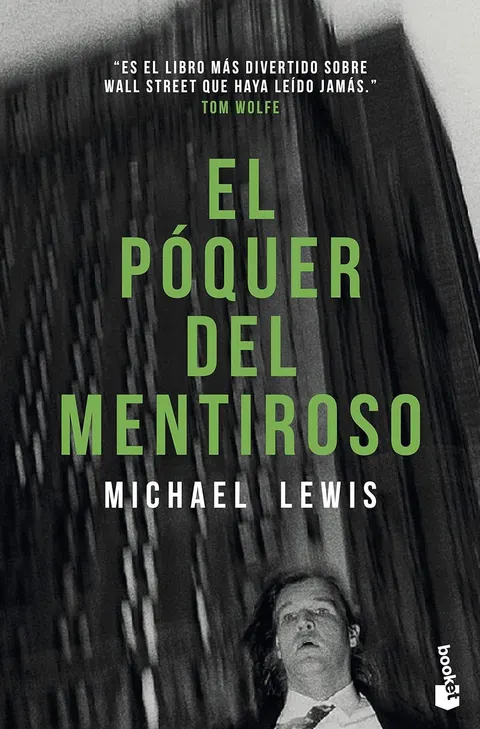
«Liar's Poker» is Michael Lewis's first book and remains one of the finest portraits of Wall Street culture ever written.
Affiliate CTA preview · enabled with monetization (phase 5).
«Liar's Poker» is Michael Lewis's first book and remains one of the finest portraits of Wall Street culture ever written.
Affiliate CTA preview · enabled with monetization (phase 5).
Michael Lewis's first book, written from inside Salomon Brothers in the 1980s, is a visceral chronicle of Wall Street culture during the junk bond and mortgage-backed securities explosion — an insider perspective on the incentives and dysfunctions behind later financial crises.
«Liar's Poker» is Michael Lewis's first book and remains one of the finest portraits of Wall Street culture ever written. Lewis narrates from the inside his experience as a bond trader at Salomon Brothers during the 1980s — at the height of the high-yield bond explosion and the first mortgage-backed securities, a period when a handful of traders amassed fortunes that seemed obscene even by Wall Street's own standards. The book works simultaneously as memoir and cultural chronicle. Lewis has the gift of making complex financial instruments comprehensible without sacrificing narrative pace, and the environment he describes — the shouting on trading floors, the brutal hierarchy between the department's «Big Swinging Dicks» and incoming analysts — has a precision few subsequent books have matched. Published in 1989, its historical relevance extends beyond the period: many of the incentive structures and risk-taking cultures Lewis describes at Salomon Brothers survived that era and reappeared in different forms in subsequent crises. Above all, it is a book about how institutional incentives shape individual behavior.
For those who want to understand Wall Street culture from the inside through one of its best narrators; highly recommended before reading «The Big Short» or «Too Big to Fail».
Fact«Liar's Poker» was published in 1989; Lewis has written that his Salomon Brothers experience convinced him the financial system was deeply broken — the book was his account of that realization.