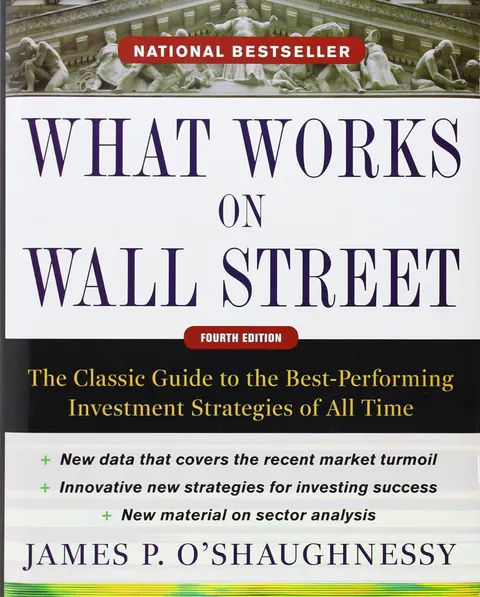
Cover of What Works on Wall Street
Stock investing

What Works on Wall Street

★★★★☆ No ratings 1 min read

«What Works on Wall Street» is among the most frequently cited books in systematic investing discussions, and for good reason: O'Shaughnessy subjects more than fifty investment strategies to empirical testing using a dataset spanning eighty years of US market history.

Affiliate CTA preview · enabled with monetization (phase 5).

O'Shaughnessy empirically tests more than fifty investment strategies using 80 years of market data, identifying which factors — value, momentum, quality, size — have generated statistically robust superior returns. A foundational quantitative investing text that dismantles popular myths with decades of hard market evidence.

Our review

«What Works on Wall Street» is among the most frequently cited books in systematic investing discussions, and for good reason: O'Shaughnessy subjects more than fifty investment strategies to empirical testing using a dataset spanning eighty years of US market history. The result is a methodical dismantling of the most common intuitions held by active investors — large-cap growth stocks tend to disappoint; combined valuation and price-momentum factors have historically outperformed over the long run. The book is technically dense and assumes familiarity with fundamental analysis and basic statistics, making it a demanding but highly instructive read. Its main limitation, acknowledged by the author in later editions, is that the underlying COMPUSTAT data carries survivorship bias that may inflate some strategies' historical performance. The 2012 fourth edition incorporates significant revisions that improve the analytical rigour. For anyone interested in factor investing or quantitative portfolio management, this remains an essential reference on which variables have historically mattered — and which have not.

Who it's for

Ideal for analytically minded investors who want to understand factor investing from the data up; not an introductory read.

Key takeaways

  • Combined price momentum and valuation factors have historically outperformed most intuitive stock-picking strategies.
  • Large-cap growth stocks tend to underperform because the market has already priced in their optimistic outlook.
  • No single factor is infallible — statistical robustness requires combining multiple selection criteria.
  • Historical datasets carry real limitations, including survivorship bias, which investors must understand before replicating any strategy.
Fact

The dataset underlying the book covers 1927–2009, representing over 80 years of US equity market data.

Topics inversión cuantitativafactoresmomentumvalordatos históricos