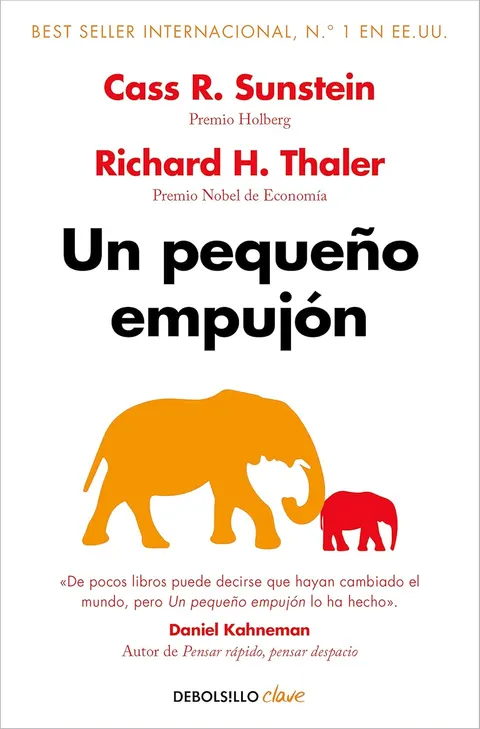
Cover of Nudge
Psychology & decisions

Nudge

The Final Edition

★★★★☆ No ratings 1 min read

«Nudge», published in 2008 by Richard H.

Affiliate CTA preview · enabled with monetization (phase 5).

Nobel laureate Richard Thaler and Cass Sunstein introduce "choice architecture": how the way options are presented enormously influences decisions without prohibitions or mandates. Applied to finance, they show how small design changes in retirement savings systems can dramatically improve the financial behavior of millions.

Our review

«Nudge», published in 2008 by Richard H. Thaler and Cass R. Sunstein, brought the concept of «choice architecture» into mainstream debate: the idea that the design of the environment in which decisions are made — the ordering of options, the default setting, the framing of the problem — has a decisive influence on human behaviour, often without the individual being aware of it. The book proposes a policy framework the authors call «libertarian paternalism»: designing choices so that the default option is the most beneficial for the individual, while leaving full freedom to opt for something different. The applications described — from automatic enrolment in pension plans to school cafeteria design — are concrete and supported by empirical evidence. Thaler received the Nobel Prize in Economics in 2017, partly for the work that gave rise to this book. The most frequent critique is philosophical: who decides what the «best» choice is for others? The book addresses this objection, though not in a way that satisfies everyone.

Who it's for

For economists, policymakers, marketers, and any reader interested in how the design of contexts shapes human behaviour.

Key takeaways

  • The default option is the most powerful tool in choice architecture: the vast majority of people accept it without changing it.
  • «Nudges» do not eliminate freedom of choice; they modify the environment so that the beneficial option is the easiest to take.
  • Automatic enrolment in pension plans, with an opt-out option, significantly increases participation rates compared to voluntary sign-up.
  • Cognitive biases are predictable and consistent; designing for them rather than ignoring them produces better outcomes at scale.
Fact

Richard H. Thaler received the Nobel Prize in Economics in 2017; «Nudge», published in 2008, was among the works cited by the Royal Swedish Academy of Sciences in its recognition.

Topics Richard Thalerpaternalismo libertarioarquitectura de elecciónahorroNobel