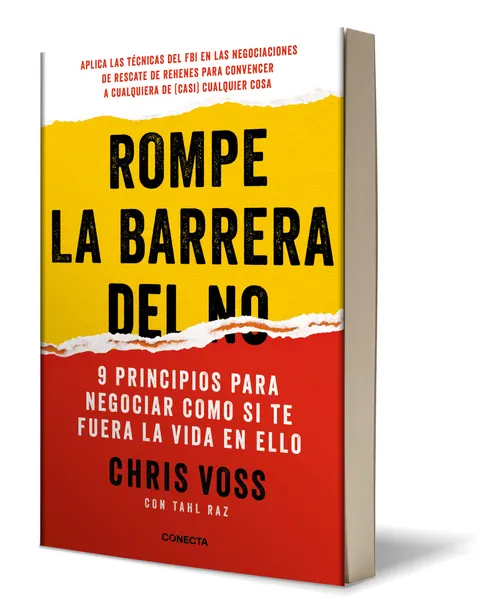
Cover of Never Split the Difference
Bestseller
Strategy & life

Never Split the Difference

Negocia como si te fuera la vida en ello

★★★★½ 10.0/10 (1) 1 min read

Chris Voss spent decades negotiating with kidnappers, terrorists, and hostage-takers for the FBI before converting that knowledge into a book on negotiation that challenges the field's conventional wisdom.

Affiliate CTA preview · enabled with monetization (phase 5).

Former FBI hostage negotiator Chris Voss reveals the high-stakes negotiation techniques he developed in life-or-death situations, showing how to apply them in business, finance, and everyday contexts. Revolutionary for salary negotiations, investments, contracts, and business deals.

Our review

Chris Voss spent decades negotiating with kidnappers, terrorists, and hostage-takers for the FBI before converting that knowledge into a book on negotiation that challenges the field's conventional wisdom. The classical negotiation tradition — codified in Fisher and Ury's "Getting to Yes" — assumes that people are rational agents who respond to logical arguments. Voss argues, drawing on neuroscience and real operational experience, that decisions are made emotionally first and rationalized afterward, and that rational negotiation techniques frequently fail precisely because they ignore that dynamic. His tools are counterintuitive: tactical empathy is not an emotional concession but a de-escalation technique; mirroring — repeating the last few words of the other person — induces elaboration without making them feel interrogated; calibrated questions ("How am I supposed to do that?") generate information without triggering resistance. The book is practical and fast to read, and its techniques are immediately applicable in commercial, salary, and everyday negotiations. Its honest weakness is that most examples come from high-stakes situations that differ structurally from ordinary business negotiation, which readers should bear in mind when adapting the techniques.

Who it's for

For professionals who negotiate regularly — salespeople, executives, lawyers, buyers — and anyone wanting to improve effectiveness in difficult conversations in any context.

Key takeaways

  • Tactical empathy does not mean agreeing — it means making the other person feel understood before advancing the negotiation.
  • Calibrated questions ("How?", "What?") generate information and open options without triggering the defensive resistance that closed questions produce.
  • The initial "no" in a negotiation is not the end: it is often the beginning of the real conversation, because it reduces the other party's anxiety.
  • Labeling the other person's emotions ("It seems like this creates uncertainty for you") deactivates negative reactions more effectively than ignoring them.
Fact

Published in 2016, Never Split the Difference became one of the best-selling negotiation books of the decade and is standard reading in MBA programs and law schools.

Topics Chris VossnegociaciónFBIcomunicaciónacuerdos