Cover of A Liberal Revolution for Spain
Spanish authors

A Liberal Revolution for Spain

anatomía de un país libre y próspero : ¿cómo sería y qué beneficios obtendríamos?

★★★★☆ No ratings 1 min read

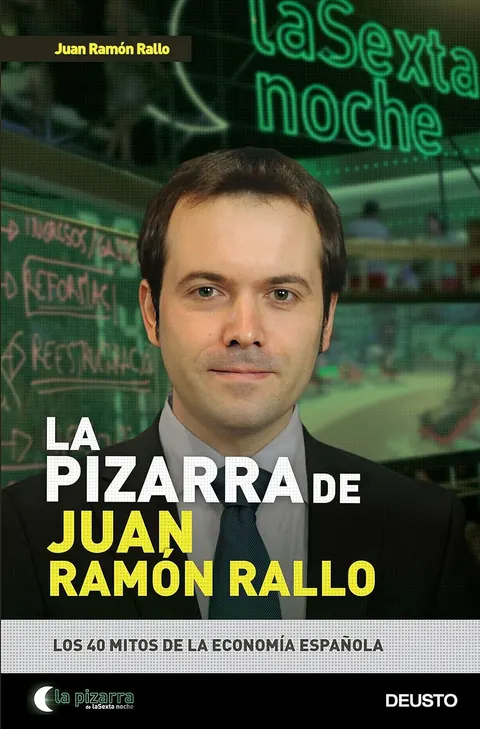
Juan Ramón Rallo is one of Spain's most prolific and well-known liberal economists.

Affiliate CTA preview · enabled with monetization (phase 5).

Liberal economist Juan Ramón Rallo proposes a structural reform program for the Spanish economy based on classical liberalism: public spending reduction, tax simplification, labor market liberalization, privatization of inefficient public services, and deregulation of real estate and energy. Both a diagnosis of Spain's structural problems and a free-market solution proposal.

Our review

Juan Ramón Rallo is one of Spain's most prolific and well-known liberal economists. In this book, published in 2014 at the height of the Spanish economic crisis, he proposes a structural reform programme based on classical liberal principles: reduction of public spending, tax reform toward less distortionary taxes, liberalisation of the labour market, and privatisation of non-essential public services. The book has the merit of being coherent and systematic: Rallo makes no concessions to populism of any stripe and applies his principles rigorously, even when the conclusions are politically uncomfortable. Its greatest limitation is precisely its ideological coherence: those who do not share the premises of classical liberalism will find that many proposals rest on axioms that the book itself does not question. The debate on the optimal size of the state, the role of public goods, or the limits of the market is not addressed with the same depth as the concrete proposals. It is a valuable book for understanding the contemporary Spanish liberal agenda, regardless of the reader's ideological position.

Who it's for

For readers interested in liberal economic thought and the debate on structural reform of the Spanish economy; also recommended for those who want to understand the strongest version of this argument before engaging with it critically.

Key takeaways

  • Rallo argues that reducing public spending is not a cyclical adjustment objective but a structural condition for sustained growth.
  • Labour market reform is, for the author, the change with the greatest potential impact on productivity and employment in Spain.
  • Classical liberalism distinguishes between income redistribution — which can be legitimate — and the distortion of incentives through regulation.
  • The book reflects the 2014 debate on Spain's exit from the crisis and constitutes a relevant document of that historical moment.
Fact

The book was published in 2014, when the unemployment rate in Spain exceeded 24%, the second highest in the European Union after Greece, according to Eurostat.

Topics Juan Ramón RalloliberalismoEspañareformas económicaslibre mercado