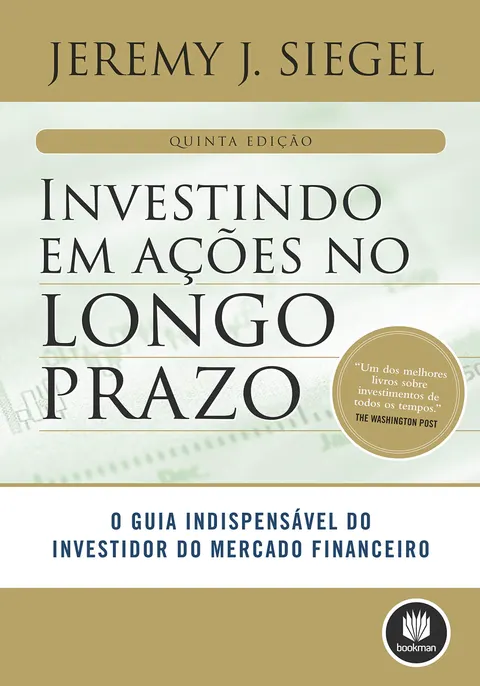
Cover of The Future for Investors
Stock investing

The Future for Investors

Why the Tried and the True Triumphs Over the Bold and the New

★★★★☆ 10.0/10 (1) 1 min read

The Future for Investors is the natural successor to Stocks for the Long Run: while that earlier work established the historical superiority of equities, this one goes further and asks which stocks within the market have delivered the best returns.

Affiliate CTA preview · enabled with monetization (phase 5).

Jeremy Siegel, Wharton finance professor, analyses which stocks have historically delivered the best long-term returns — and the answer is counterintuitive: not growth or tech companies, but mature firms with growing dividends and reasonable valuations. Backed by exhaustive historical data.

Our review

The Future for Investors is the natural successor to Stocks for the Long Run: while that earlier work established the historical superiority of equities, this one goes further and asks which stocks within the market have delivered the best returns. Jeremy Siegel's answer is counterintuitive: not high-growth technology companies or headline-grabbing megamergers, but mature, dividend-paying companies in seemingly dull sectors like consumer staples and energy. The explanatory mechanism is the «dividend return effect»: when a company trades cheaply and dividends are reinvested, investors accumulate more shares at lower prices, compounding total return over time. The book's empirical rigour is considerable — Siegel works with data series spanning decades — though his conclusions rest on a very specific historical period in the US market, which should prompt readers to question how far they generalise to other markets or future decades. It is a book that challenges assumptions and forces independent thinking, two qualities that make it valuable even for those who disagree with every conclusion.

Who it's for

For investors with some grounding who want to question their assumptions about growth and returns; requires comfort with historical data and basic statistical reasoning.

Key takeaways

  • High-growth companies are not necessarily the ones that deliver the best shareholder returns over the long term.
  • Reinvested dividends are a particularly powerful return multiplier when a stock trades at low valuations.
  • So-called «boring» sectors — consumer staples, pharma, energy — have historically outperformed technology in total return.
  • Entry price matters: even outstanding businesses destroy returns if purchased at excessive valuations.
Fact

Published in 2005, the book analyses S&P 500 data going back to 1950, tracking the performance of the index's original constituents over half a century.

Topics Jeremy Siegeldividendoslargo plazoretornos históricosacciones