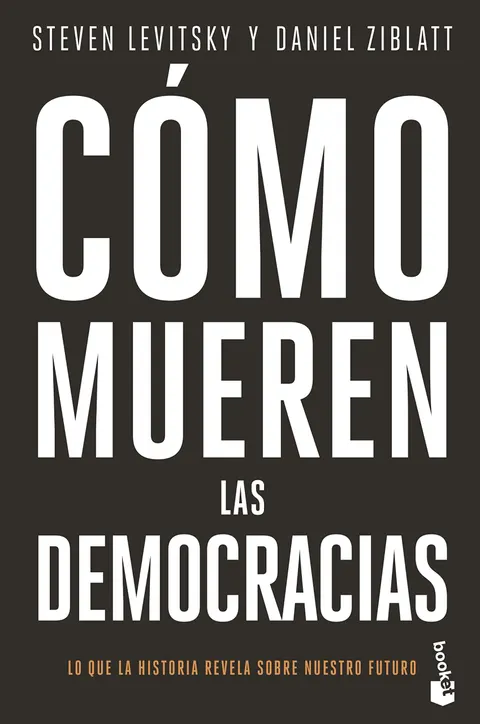
Cover of How Democracies Die
Macroeconomics

How Democracies Die

★★★★☆ No ratings 1 min read

«How Democracies Die», published in 2018 by Harvard professors Steven Levitsky and Daniel Ziblatt, is the most influential political science analysis of the past decade on contemporary democratic erosion.

Affiliate CTA preview · enabled with monetization (phase 5).

Harvard professors Levitsky and Ziblatt analyse how modern democracies die not at the hands of military coups but from within: democratically elected leaders who gradually erode institutions until they are hollow. Using Interwar Europe, Latin America, and contemporary US examples, they identify warning signs that precede democratic collapse.

Our review

«How Democracies Die», published in 2018 by Harvard professors Steven Levitsky and Daniel Ziblatt, is the most influential political science analysis of the past decade on contemporary democratic erosion. Its central thesis subverts the classic image of the military coup: in the twenty-first century, democracies do not die at the hands of generals but are hollowed out from within by democratically elected leaders who gradually erode institutions, co-opt or neutralize independent arbiters — judges, prosecutors, media — and use the legal framework to consolidate power. The authors identify four key warning signs of authoritarianism: rejection of democratic rules, denial of the legitimacy of opponents, tolerance or encouragement of violence, and willingness to curtail civil liberties. The book combines the rigor of comparative political science with accessible prose and numerous case studies: Venezuela, Turkey, Hungary, Peru, Russia. Its main limitation is that the analysis focuses almost exclusively on the executive as the vector of deterioration, with less attention to the structural economic or social factors that make societies vulnerable to authoritarianism.

Who it's for

For readers interested in political science, contemporary history, and the state of liberal democracies; accessible without specialized training and particularly relevant to the current European and Latin American political context.

Key takeaways

  • Contemporary democracies do not die in a coup but through gradual institutional erosion from within, often maintaining a veneer of legality.
  • The authors identify four warning signs of authoritarianism that allow detection of leaders with anti-democratic tendencies before they consolidate power.
  • Institutional safeguards — separation of powers, independent judges, free media — are more fragile than they appear when an executive is willing to challenge them systematically.
  • Extreme political polarization is a key facilitator of authoritarianism: when the political opponent is seen as an existential enemy, informal democratic norms cease to function.
Fact

«How Democracies Die» was published in January 2018 by Crown Publishers and reached the New York Times bestseller list; its authors, Levitsky and Ziblatt, are professors of Government at Harvard University.

Topics LevitskyZiblattdemocraciainstitucionesriesgo político