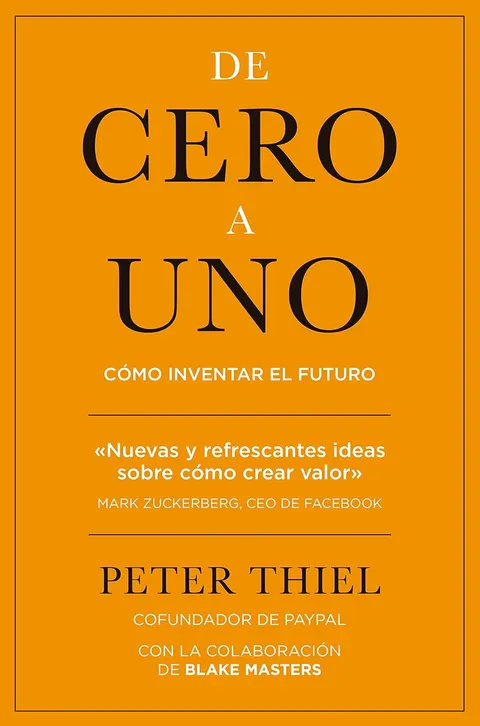
Cover of Zero to One
Bestseller
Corporate finance

Zero to One

★★★★½ No ratings 1 min read

Peter Thiel's argument is deceptively simple: copying what already works takes the world from 1 to n, but genuine progress means doing something nobody has done before — going from 0 to 1.

Affiliate CTA preview · enabled with monetization (phase 5).

PayPal co-founder Peter Thiel argues that real innovation is not copying what exists (going from 1 to n) but creating something genuinely new (going from 0 to 1). He defends monopoly-building in new markets as the only true business success. For investors, a guide to identifying companies that genuinely create value versus those merely competing in saturated markets.

Our review

Peter Thiel's argument is deceptively simple: copying what already works takes the world from 1 to n, but genuine progress means doing something nobody has done before — going from 0 to 1. That distinction drives every chapter of this book, which reads less like a startup guide and more like a provocation aimed at anyone who defaults to incremental thinking. Thiel makes a vigorous case for monopoly, arguing that only companies insulated from competition can afford to plan for decades rather than quarters. The writing is aphoristic and confident, sometimes to a fault: Thiel presents strongly held personal views — particularly on politics and social organization — as settled conclusions, and readers should engage critically rather than accept them wholesale. The business insights, however, remain sharp. His framework for evaluating whether a company has durable advantages (proprietary technology, network effects, economies of scale, brand) is as useful today as when he wrote it. The book's most lasting contribution is the question it opens with: "What important truth do very few people agree with you on?" It is a filter worth applying to any investment thesis, business plan, or career decision.

Who it's for

For technology founders and venture-minded investors who want a framework for original thinking; less valuable for those seeking operational how-to guidance.

Key takeaways

  • Genuine innovation creates something new (0→1) rather than globalizing an existing model (1→n).
  • Creative monopolies are economically beneficial because they generate the stability needed to take long-term risks.
  • Successful startups dominate a small niche completely before attempting broader expansion.
  • Contrarian thinking — believing something true that most people reject — is the rarest and most valuable competitive edge.
Fact

Published in 2014, the book originated as notes from a Stanford class Thiel taught in 2012, compiled by student Blake Masters.

Topics Peter ThielstartupmonopolioinnovaciónPayPal