Economics in One Lesson
Published in 1946, «Economics in One Lesson» remains one of the most effective introductions to rigorous economic thinking ever written.
Affiliate CTA preview · enabled with monetization (phase 5).
Published in 1946, «Economics in One Lesson» remains one of the most effective introductions to rigorous economic thinking ever written.
Affiliate CTA preview · enabled with monetization (phase 5).
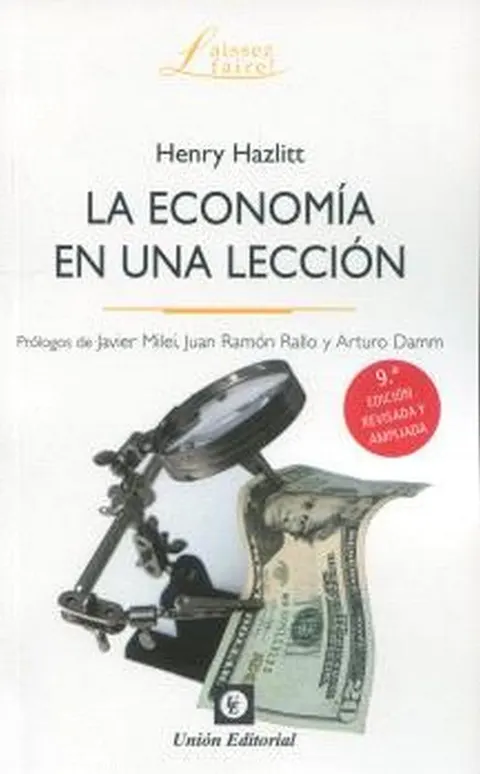
The best-selling economics book of all time. Henry Hazlitt builds all economic thinking on one lesson: any policy must be judged by its long-term effects on everyone, not just short-term effects on the favored group. He then dismantles the most popular economic myths: protectionism, price controls, artificial full employment, and inflationary spending.
Published in 1946, «Economics in One Lesson» remains one of the most effective introductions to rigorous economic thinking ever written. Henry Hazlitt, a journalist by training and a disciple of Ludwig von Mises, builds his entire argument on a single observation: the most persistent error in economic reasoning is focusing only on the immediate, visible effects of a policy while ignoring the long-term consequences for those who don't make the headlines. Armed with that one lens, Hazlitt dismantles popular arguments for protective tariffs, employment subsidies, price controls, and public spending programs, exposing in each case the hidden costs that superficial thinking misses. His intellectual debt to Frédéric Bastiat is openly acknowledged; what Hazlitt adds is a journalist's gift for clarity. The honest limitation of the book is its polemical nature: it is an argument, not a neutral survey of economic thought. Its analytical rigor coexists with a selective choice of examples that favor free-market conclusions. Readers seeking a balanced introduction to macroeconomics will need to complement it with Keynesian or institutionalist perspectives. As a first encounter with classical liberal economics, however, few books match its accessibility and persuasive force.
For anyone who wants to understand why economic policies produce unintended consequences; less suited for readers seeking a balanced survey of economic schools of thought.
FactFirst published in 1946 by Harper & Brothers, the book has remained continuously in print for over 70 years and has been translated into more than ten languages.