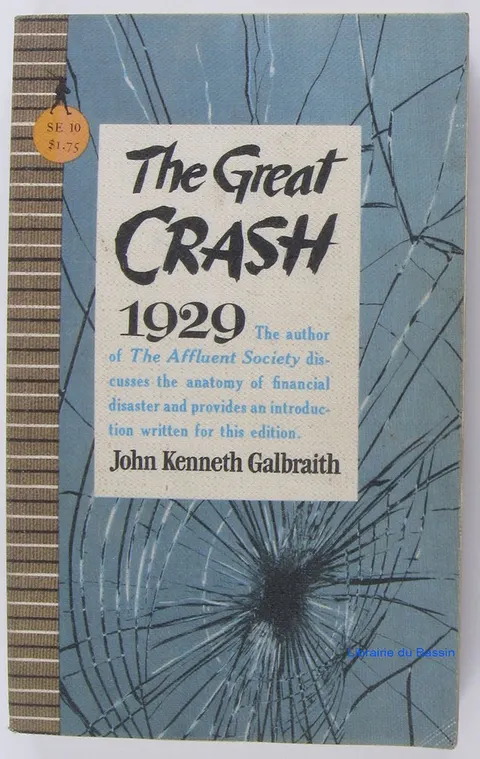
The Great Crash 1929
First published in 1954, this book remains the most cited analysis of the 1929 stock market crash and the speculative euphoria that preceded it.
Affiliate CTA preview · enabled with monetization (phase 5).
First published in 1954, this book remains the most cited analysis of the 1929 stock market crash and the speculative euphoria that preceded it.
Affiliate CTA preview · enabled with monetization (phase 5).
The reference work on the 1929 stock market crash and the Great Depression that followed. Galbraith reconstructs year by year the speculative euphoria of the 1920s, the role of banks and investment trusts, the October 1929 collapse, and the decade-long social and economic consequences. Not just a historical chronicle but a diagnosis of the mechanisms that cause financial crises to repeat.
First published in 1954, this book remains the most cited analysis of the 1929 stock market crash and the speculative euphoria that preceded it. Galbraith does not merely narrate events: he dissects the mechanisms that allowed systemic fragility to accumulate throughout the 1920s, from the massive leverage of investment trusts to regulatory negligence and the complicity of financial media. The style is that of an ironic historian rather than a technical economist, making the text accessible without sacrificing rigour. One of the book's most enduring contributions is its description of how the optimistic narrative feeds on itself: every rise justifies the next, until there is no additional buyer to support prices. The most legitimate criticism of the book is its emphasis on financial factors over the structural causes of the subsequent depression, an academic debate that remains open. Even so, as a portrait of mass speculative psychology and the failure of institutions to anticipate the obvious, few works match it.
For investors, economists, and historians who want to understand the origin of the twentieth century's greatest financial collapse; less useful for those seeking contemporary macroeconomic analysis.
FactThe Dow Jones Industrial Average lost approximately 89% of its value between its September 1929 peak and its July 1932 low.