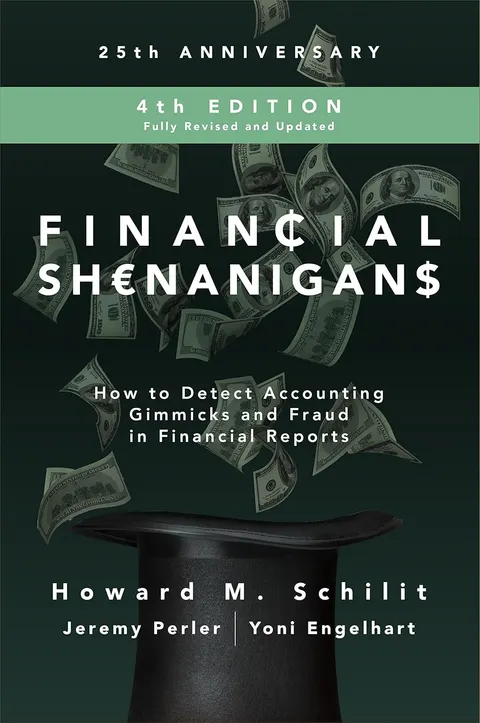
Cover of Financial Shenanigans: How to Detect Accounting Gimmicks and Fraud in Financial Reports
English only

Financial Shenanigans: How to Detect Accounting Gimmicks and Fraud in Financial Reports

★★★★½ No ratings 1 min read

Financial Shenanigans is the reference manual for any analyst who wants to read financial statements beyond the headlines.

Affiliate CTA preview · enabled with monetization (phase 5).

The definitive guide to detecting accounting fraud in financial reports. Schilit identifies seven tricks companies use to inflate revenue, hide expenses, or disguise financial conditions — with real examples from Enron, WorldCom, and Wirecard. Indispensable for analysts, equity investors, and risk managers who want to see beyond surface numbers.

Our review

Financial Shenanigans is the reference manual for any analyst who wants to read financial statements beyond the headlines. Howard Schilit, founder of the Center for Financial Research and Analysis, systematizes decades of research into seven categories of accounting manipulation: from premature revenue recognition to distorted cash flow metrics. What sets this book apart from other fraud texts is its forensic approach — it does not merely catalog historical cases but teaches a detection process step by step, drawing on real SEC filings and financial statement footnotes. The 2018 third edition adds 21st-century cases, including technology and high-growth companies where earnings pressure is especially acute. The prose is direct and almost didactic, making an otherwise dry subject accessible. The book's main limitation is its retrospective nature: the cases analyzed were already publicly exposed, which aids learning but does not guarantee that readers will spot the next fraud before it breaks. That caveat aside, this remains essential reading for anyone conducting deep fundamental analysis of public companies.

Who it's for

Essential for fundamental analysts, auditors, and accounting students; less relevant for passive investors who do not read financial statements directly.

Key takeaways

  • Schilit's seven categories of accounting manipulation span everything from artificial revenue recognition to free cash flow distortion.
  • Footnotes and changes in accounting policy are typically the first red flags worth examining in any financial report.
  • Quarterly earnings pressure is the most common driver of aggressive accounting practices.
  • Forensic financial analysis is a practical skill built through real examples, not theory alone.
Fact

The third edition, published in 2018, expanded the previous edition with new cases from 21st-century companies, including high-growth technology firms.

Topics accounting fraudforensic accountingfinancial statementsanalysisrisk management