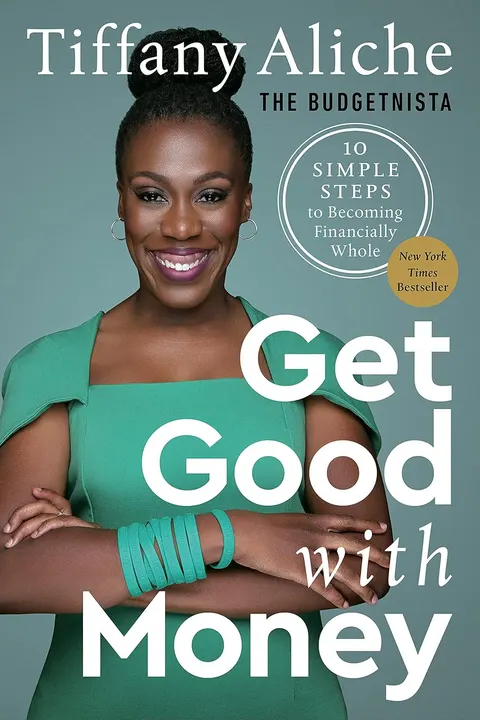
Cover of Get Good with Money: Ten Simple Steps to Becoming Financially Whole
English only

Get Good with Money: Ten Simple Steps to Becoming Financially Whole

Ten Simple Steps to Becoming Financially Whole

★★★★☆ No ratings 1 min read

«Get Good with Money» is one of the best-selling personal finance books in the United States in recent years, and its success rests on a structural reason: Tiffany Aliche, «The Budgetnista», builds an absolutely concrete, sequential ten-step plan — free of unnecessary jargon and requiring no prior financial knowledge — to eliminate debt, build an emergency fund, secure appropriate insurance, and invest for retirement.

Affiliate CTA preview · enabled with monetization (phase 5).

Tiffany "The Budgetnista" Aliche presents a ten-step plan to eliminate debt, build an emergency fund, invest for retirement, and achieve financial peace. With an accessible, empathetic tone, she helps people who have never learned personal finance take full control of their money — no jargon required.

Our review

«Get Good with Money» is one of the best-selling personal finance books in the United States in recent years, and its success rests on a structural reason: Tiffany Aliche, «The Budgetnista», builds an absolutely concrete, sequential ten-step plan — free of unnecessary jargon and requiring no prior financial knowledge — to eliminate debt, build an emergency fund, secure appropriate insurance, and invest for retirement. The book grew from Aliche's personal experience: she lost her savings during the 2008 financial crisis and rebuilt her financial position step by step. That autobiographical credibility is one of its core assets. For readers outside the United States, the most significant limitation is that several chapters are designed around the US financial and tax system — 401(k) accounts, IRAs, FICO scores — and require adaptation to other contexts. For anyone seeking a complete, ordered financial roadmap from the ground up, it is an honest and practical reference.

Who it's for

Recommended for people in debt or without a financial structure who want a clear step-by-step plan; readers outside the US will need to adapt the specific instruments to their local financial system.

Key takeaways

  • Financial health is built in sequence: first eliminate high-cost debt, then build an emergency fund, then secure adequate insurance, then invest for the long term.
  • A monthly budget is not a restriction — it is the tool that converts income into wealth rather than into consumed spending.
  • An emergency fund covering three to six months of expenses is the first firewall that prevents an unexpected event from erasing accumulated financial progress.
  • Automating contributions to investment plans removes dependence on emotional discipline, which is fragile under pressure.
Fact

Published in 2021 (Rodale Books), the book reached New York Times bestseller status; Tiffany Aliche's platform reports having helped over one million women improve their financial situation.

Topics personal financebudgetingdebtfinancial freedombeginner