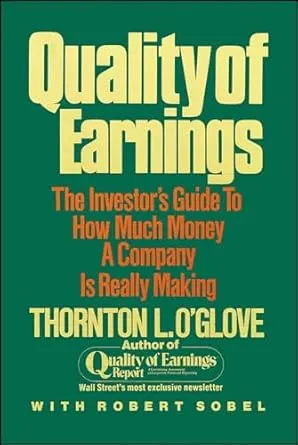
Cover of Quality of Earnings
English only

Quality of Earnings

★★★★☆ 4.0/10 (1) 1 min read

«Quality of Earnings» by Thornton O'Glove is a classic of fundamental analysis published in 1987 that retains a surprising relevance: its lessons on how companies manipulate their accounting figures to appear more profitable than they are have not dated, because the techniques described continue to be used.

Affiliate CTA preview · enabled with monetization (phase 5).

A classic of fundamental analysis that teaches investors to read financial statements with a critical eye. O'Glove explains how companies manipulate accounting figures to appear more profitable than they are, and how to detect those traps before investing. Published in 1987, its lessons remain fully relevant and are used by professional analysts worldwide.

Our review

«Quality of Earnings» by Thornton O'Glove is a classic of fundamental analysis published in 1987 that retains a surprising relevance: its lessons on how companies manipulate their accounting figures to appear more profitable than they are have not dated, because the techniques described continue to be used. O'Glove teaches readers to look beyond reported net income — the most easily manipulated metric — and to analyse operating cash flow, the quality of recognised revenues, and warning signs in financial statements. The book is written accessibly, with real-company examples from the era, making it concrete and pedagogical. Its main limitation is temporal: accounting frameworks have changed significantly since 1987 (GAAP and IFRS have both evolved considerably), so some specific examples and accounting conventions are outdated. However, the analytical framework — systematic scepticism toward accounting earnings and the centrality of cash flow — is as valid today as when it was written. For any investor who analyses balance sheets and income statements, this book delivers an education in critical accounting thinking that is hard to find elsewhere.

Who it's for

Best suited to fundamental investors and financial analysts who want to develop the ability to detect accounting manipulation and assess the true quality of reported earnings.

Key takeaways

  • Reported net income is the easiest metric to manipulate; operating cash flow is a more reliable signal of a company's true financial health.
  • Companies that accelerate revenue recognition or capitalise expenses that should be operational are typically dressing up their results.
  • Comparing net income growth with free cash flow growth over several years reveals discrepancies that point to poor accounting quality.
  • Sudden changes in accounting policies — even if technically valid under GAAP or IFRS — should always be treated as a warning sign.
Fact

Originally published in 1987 by Free Press, the book remains a recommended reference in financial analysis courses and CFA fundamental analysis curricula.