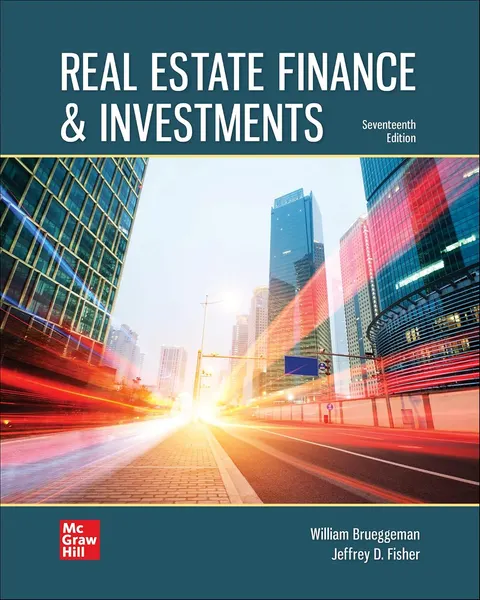
Cover of Real Estate Finance & Investments
Real estate investing

Real Estate Finance & Investments

★★★★☆ No ratings 1 min read

«Real Estate Finance & Investments» by Brueggeman and Fisher is the standard reference textbook on real estate finance in the world's most prestigious MBA programmes.

Affiliate CTA preview · enabled with monetization (phase 5).

The reference university textbook on real estate finance and investment, used in the world's top MBA programmes. Covers asset valuation, real estate cycle analysis, mortgage financing structures, REITs, real estate private equity, and risk management in real asset portfolios — the academic foundation for serious real estate investors.

Our review

«Real Estate Finance & Investments» by Brueggeman and Fisher is the standard reference textbook on real estate finance in the world's most prestigious MBA programmes. It is neither a popularisation nor a motivational guide — it is a technical text that rigorously covers real estate asset valuation, the real estate cycle, mortgage financing structures, REITs, and collective investment vehicles in property. Each chapter includes quantitative exercises and financial models the reader can replicate. The framework is decidedly US-centric — the legal, tax, and market structures correspond to the American context — which requires European readers to adapt concepts to their own jurisdiction. The 2015 edition is somewhat dated with respect to alternative financing and real estate crowdfunding platforms, which have grown significantly since publication. Nevertheless, for anyone seeking a thorough technical grounding in real estate valuation and financing at an academic level, this book has no equivalent in English.

Who it's for

Best suited to real estate professionals, REIT analysts, and MBA students who need a rigorous technical treatment of real estate finance; not a guide for retail investors.

Key takeaways

  • Real estate asset valuation combines direct capitalisation, discounted cash flow, and comparable market methods depending on asset type.
  • Financing structure — LTV ratio, interest rate, term — determines both the risk profile and potential return of a real estate investment.
  • REITs offer real estate exposure with stock market liquidity, though with distinct tax and return characteristics compared to direct investment.
  • The real estate cycle follows supply-and-demand dynamics with time lags that create predictable opportunities and risks.
Fact

The fourteenth edition, published in 2015, has been used as a core text in MBA programmes at institutions including Harvard, Wharton, and MIT.

Topics inmobiliariavaloraciónREITsfinanzas inmobiliariasmanual universitario