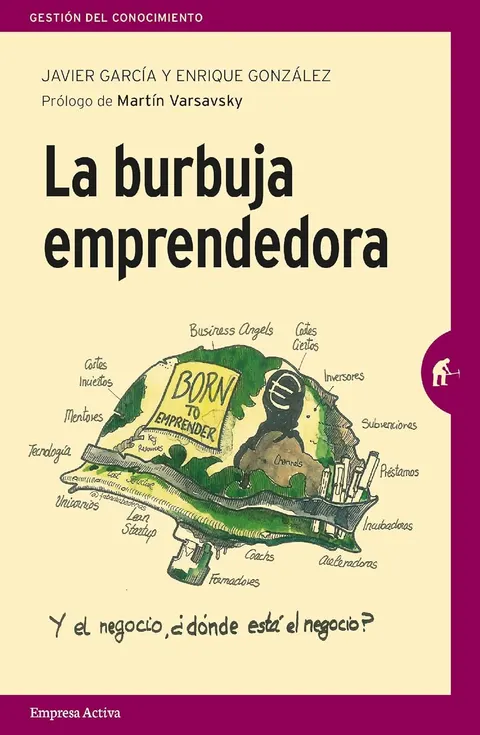
Cover of The Startup Bubble
Corporate finance

The Startup Bubble

★★★★☆ No ratings 1 min read

«The Startup Bubble» arrives as an antidote to the triumphalist narrative that dominates startup culture.

Affiliate CTA preview · enabled with monetization (phase 5).

A collective critical work on the startup ecosystem and the entrepreneurship cult that has dominated business culture for two decades. The authors debunk dominant startup mythology — the garage, the pivot, the funding round, the unicorn — revealing real failure rates, survivorship bias, and the human and financial costs the heroic narrative usually hides.

Our review

«The Startup Bubble» arrives as an antidote to the triumphalist narrative that dominates startup culture. Its authors — economists, researchers, and battle-scarred entrepreneurs — argue that the startup ecosystem of the past two decades has been artificially inflated by cheap money, image culture, and a narrative that conflates risk with vocation. The book dismantles operational myths: most unicorns lose money for years before becoming profitable (or never do), the real failure rate of startups vastly exceeds 90% when silent dissolutions are included, and the venture capital financing model is structurally designed to favour investors over founders. The work is more diagnostic than prescriptive: it identifies the perverse incentives of the system with precision without always offering alternatives as detailed as the analysis itself. Its primary value is therapeutic and analytical — it restores scepticism to a debate that had lost it. A fair critique: as a collective work, the consistency of voice and the depth of arguments varies between chapters, and some analyses remain at the surface of phenomena that deserve deeper treatment.

Who it's for

Recommended for entrepreneurs considering venture capital, angel investors wanting a critical perspective on the ecosystem, and journalists or academics studying the economics of innovation.

Key takeaways

  • The entrepreneurship-as-individual-heroism narrative ignores the structural factors — networks, starting capital, ecosystem access — that actually determine success.
  • Many unicorn valuations reflect optimism about future profits, not present profitability; the distinction is critical for any serious analysis.
  • Venture capital has incentives to maximise exit value, not the long-term health of the business or the well-being of the founder.
  • Business failure is a predictable statistical event, not a moral anomaly; normalising it is a precondition for learning from it.
Fact

According to OECD data and various academic studies, between 60% and 90% of startups do not survive five years, depending on the sector and measurement methodology used.