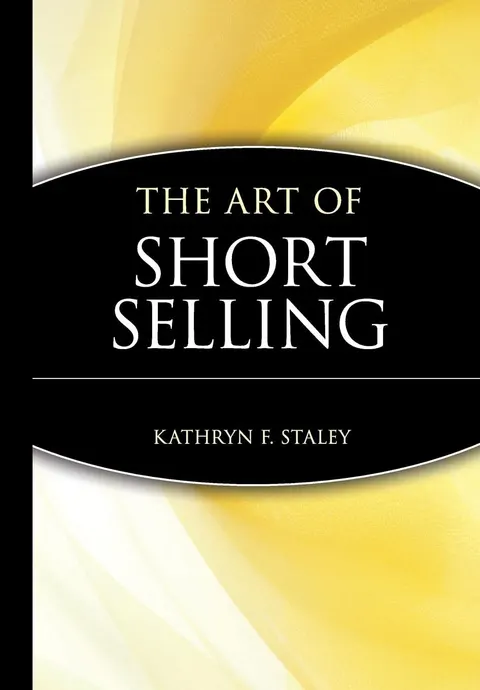
Cover of The Art of Short Selling
English only

The Art of Short Selling

★★★★☆ No ratings 1 min read

The Art of Short Selling is a practical guide to short selling published in 1997 that remains a valid reference precisely because the business mistakes Kathryn Staley analyzes recur with striking regularity.

Affiliate CTA preview · enabled with monetization (phase 5).

One of the few rigorous, practical guides to short selling. Staley explains how to identify overvalued or financially troubled companies, how to analyze financial statements from a short-seller's perspective, and how to manage risk in short positions — invaluable for sophisticated investors who want to master the other side of the market.

Our review

The Art of Short Selling is a practical guide to short selling published in 1997 that remains a valid reference precisely because the business mistakes Kathryn Staley analyzes recur with striking regularity. Short selling — betting that a stock's price will fall — is the most contrarian and psychologically demanding strategy in markets: it runs against the market's natural upward bias and against the confirmation bias of analysts who cover companies positively. Staley, an analyst with extensive short-side experience, teaches how to identify short candidates through forensic analysis of financial statements: aggressive accounting, revenue growth unsupported by cash flow, changes in management or auditors. The case studies are contemporary with the book's publication, making some examples less immediately recognizable to today's reader, but the underlying analytical framework transfers completely. The most valuable section covers risk management in short positions, where potential losses are theoretically unlimited. An essential companion read alongside Financial Shenanigans.

Who it's for

For advanced fundamental analysts and investors who want to understand short selling from a professional perspective; not appropriate for investors with limited experience reading financial statements.

Key takeaways

  • The most reliable warning signs in a short candidate are usually buried in financial statement footnotes and reflected in auditor or management changes.
  • A gap between revenue growth and operating cash flow is one of the most consistent indicators of aggressive or unsustainable accounting.
  • Risk management in short positions requires special discipline: losses can be unlimited if the market moves against you, regardless of the fundamental analysis.
  • Timing in short positions is more critical than in long positions: a company can remain overvalued for years before the market corrects the price.
Fact

The book was published in 1997 by John Wiley & Sons. Kathryn Staley worked as an analyst specializing in short selling during her career in equity markets.