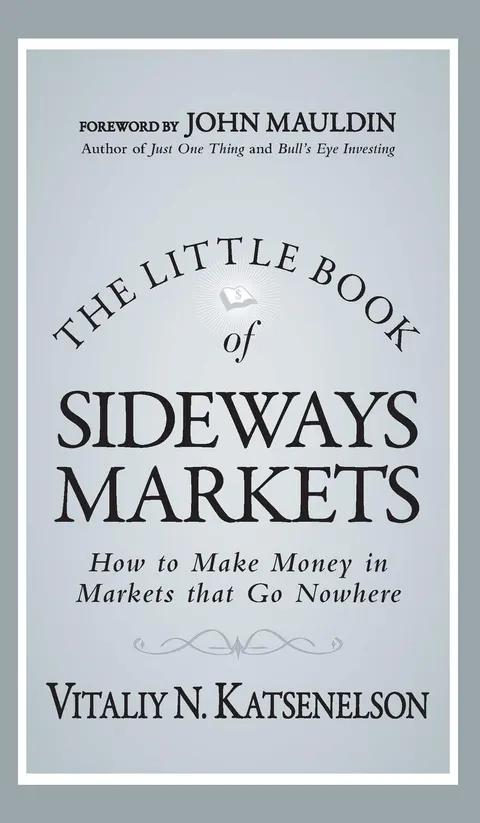
Cover of The Little Book of Sideways Markets: How to Make Money in Markets That Go Nowhere
English only

The Little Book of Sideways Markets: How to Make Money in Markets That Go Nowhere

How to Make Money in Markets that Go Nowhere

★★★★☆ No ratings 1 min read

The Little Book of Sideways Markets addresses one of the most understudied phenomena in financial markets: prolonged periods when indexes generate little or no net progress, producing mediocre total returns for years or even decades.

Affiliate CTA preview · enabled with monetization (phase 5).

Markets don't always move strongly up or down — sometimes they trade sideways for years. Katsenelson explains how to identify sideways markets, why they occur, and how to outperform by selecting quality companies with solid fundamentals. A practical guide for active investors who want to beat the market when indexes go nowhere.

Our review

The Little Book of Sideways Markets addresses one of the most understudied phenomena in financial markets: prolonged periods when indexes generate little or no net progress, producing mediocre total returns for years or even decades. Value investor Vitaliy Katsenelson argues that these markets are not passing anomalies but predictable cyclical structures that emerge when valuations are elevated at the start of a cycle. The book clearly distinguishes between secular bull and bear markets — multi-generational trends — and secular sideways markets, where active stock selection matters more than index exposure. Katsenelson proposes a concrete strategy for sideways environments: prioritize high-quality companies with reasonable valuations, dividends, and strong balance sheets. The style is conversational and accessible. The most visible limitation is that the book was written in 2011, projecting a sideways decade that in practice turned out to be a period of strong gains for U.S. indexes. That does not invalidate the theoretical framework, but it requires readers to evaluate the thesis with historical perspective.

Who it's for

Useful for active value investors wanting to understand market valuation cycles; less relevant for long-term passive index investors.

Key takeaways

  • Secular sideways markets are not random: they emerge when bull markets begin at elevated valuations that compress future returns.
  • In trendless market environments, active selection of quality companies at reasonable valuations tends to outperform index replication.
  • Dividends become especially important in sideways markets because they represent a larger share of total return when price appreciation is scarce.
  • Distinguishing secular from cyclical market phases helps adapt portfolio strategy to the macroeconomic context.
Fact

The book was published in 2011. Vitaliy Katsenelson is the founder and CIO of Investment Management Associates (IMA), based in Denver, Colorado.

Topics stock investingsideways marketsvalue investingactive investingportfolio management