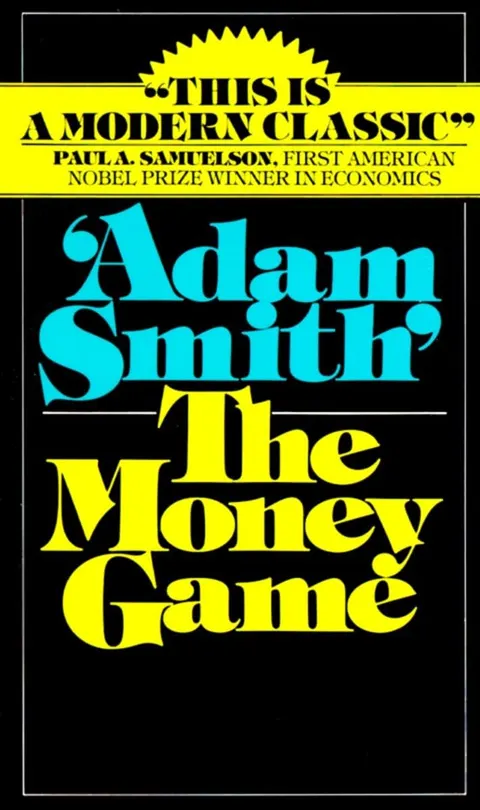
Cover of The Money Game
English only

The Money Game

★★★★☆ No ratings 1 min read

The Money Game, published in 1967 under the pseudonym «Adam Smith» by journalist George J.W.

Affiliate CTA preview · enabled with monetization (phase 5).

Written under the pseudonym "Adam Smith" by journalist George Goodman, this is a brilliant and ironic portrait of investor psychology in 1960s stock markets. With a satirical journalistic tone, Goodman explores market irrationality, the stock guru figure, and how fear and greed drive markets — a classic that deeply influenced Buffett and remains as relevant as its 1967 debut.

Our review

The Money Game, published in 1967 under the pseudonym «Adam Smith» by journalist George J.W. Goodman, is a sharp and ironic portrait of American stock market culture in the nineteen-sixties. Goodman — who later hosted the financial television program Adam Smith's Money World — writes in a voice that blends incisive analysis with dry humor, depicting fund managers, analysts, and speculators of the era as actors in a human comedy where money is simultaneously the object of the game and a substitute for identity. What makes this book surprisingly relevant today is not its market information — inevitably dated — but the psychology it describes: collective euphoria, herd thinking, post-hoc rationalization of losses, and the persistent tendency to mistake luck for skill. Keynes and economic classics appear woven through trading floor anecdotes with a naturalness that few subsequent financial books have matched. It reads more as a cultural essay than an investing manual, which makes it hard to classify but highly valuable for understanding the human dimension of markets.

Who it's for

For readers interested in market psychology and the history of American financial culture; not a technical investing book.

Key takeaways

  • Financial markets are above all a psychological game: prices reflect participants' expectations and fears as much as company fundamentals.
  • The tendency to mistake luck for skill during bull markets is as old as markets themselves and repeats with every cycle.
  • Herd thinking and social pressure in professional investment communities systematically distort individual judgment.
  • Understanding who you are as an investor — your real risk tolerance, your emotional motivations — is as important as understanding what you buy.
Fact

The Money Game was published in 1967. Its author, George J.W. Goodman, later hosted the public television financial program Adam Smith's Money World on PBS throughout the 1980s and 1990s.

Topics Wall Streetinvestor psychologystock marketclassichistory