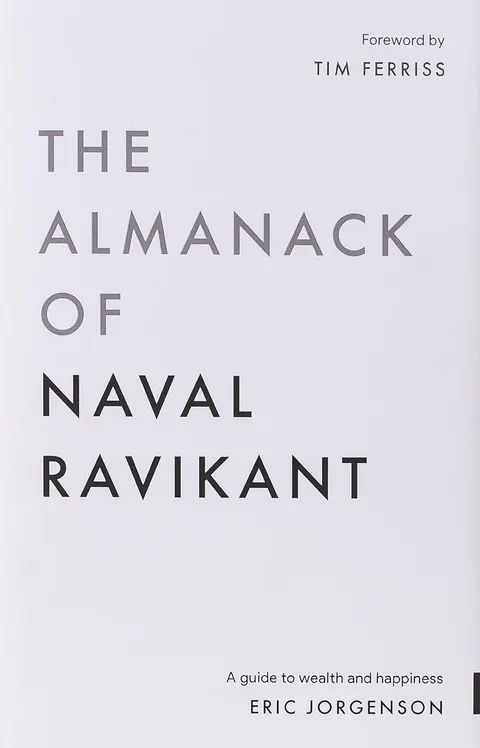
Cover of The Almanack of Naval Ravikant
Financial mindset

The Almanack of Naval Ravikant

A Guide to Wealth and Happiness

★★★★½ No ratings 1 min read

Eric Jorgenson did not write this book in the conventional sense — he assembled it.

Affiliate CTA preview · enabled with monetization (phase 5).

Eric Jorgenson compiles entrepreneur and philosopher Naval Ravikant's tweets, podcasts, interviews, and essays on building wealth and happiness. Naval argues that real wealth comes from intellectual property, capital, and code — not time sold — and that anyone can achieve it with the right decisions. One of the most-cited wealth mindset books of the past decade.

Our review

Eric Jorgenson did not write this book in the conventional sense — he assembled it. He compiled years of Naval Ravikant's tweets, interviews, and podcast appearances and organized them around two axes: how to build wealth and how to build happiness. Naval's central thesis is that real wealth does not come from selling time, but from owning assets that work without the owner's presence — code, media, capital, reputation. The book reframes the concept of "work" for the internet era and proposes a hierarchy of knowledge — mathematics, microeconomics, persuasion — as the intellectual infrastructure for anyone seeking financial freedom. Its limitations are well-documented: Naval's thinking is brilliant but often aphoristic, and the compiled format produces coherence gaps that a continuous written text would not. Nor is this a practical financial strategy book — readers will not find spreadsheets or savings frameworks here. It is a mental reframing book, and on that terrain it is genuinely valuable. A free digital version circulates with Naval's blessing.

Who it's for

For entrepreneurs, creators, and independent professionals looking to rethink their relationship with work and money; less useful for readers seeking concrete financial tactics.

Key takeaways

  • Wealth is built through assets that scale without additional time from the owner, not by selling hours.
  • Modern leverage takes three forms: capital, people, and products with no marginal cost of reproduction (code, content).
  • Specializing in something the world needs that comes naturally is more sustainable than forced discipline.
  • Happiness is a trainable skill, not a condition derived from external achievements.
Fact

Published in 2020, Naval Ravikant authorized the book's free digital distribution, enabling mass circulation without a conventional publishing campaign.

Topics Naval Ravikantriquezamentalidadfilosofíaactivos digitales