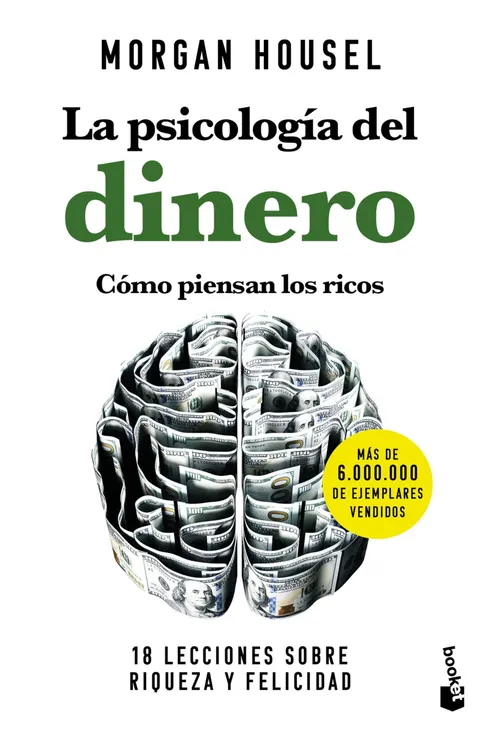
Cover of The Psychology of Money
Bestseller
Financial mindset

The Psychology of Money

Timeless lessons on wealth, greed, and happiness

★★★★½ No ratings 1 min read

The Psychology of Money starts from an uncomfortable idea: investing well depends less on what you know and more on how you behave.

Affiliate CTA preview · enabled with monetization (phase 5).

Morgan Housel argues that financial success depends not on how smart you are but on how you behave. Through 19 short, brilliantly written stories, he explores how cognitive biases, emotions, and personal history distort financial decision-making. Concepts like greed, fear, confirmation bias, and the power of the long term are explained with everyday examples and fascinating historical references.

Our review

The Psychology of Money starts from an uncomfortable idea: investing well depends less on what you know and more on how you behave. Morgan Housel, a former columnist at The Wall Street Journal and The Motley Fool, gathers 19 short stories to show that two people with the same information make opposite decisions depending on their personal history, fears and risk tolerance. The book does not teach you to read balance sheets or pick stocks; it explains why steady saving and patience beat raw talent, why no one is crazy with their money even when it looks that way, and why real wealth is the money you do not see. Housel keeps returning to compounding and to time: small decisions sustained over decades matter more than a single lucky break. The prose is plain, formula-free, and every chapter stands on its own. It is arguably the best first book for anyone who wants to fix their relationship with money before investing a single euro.

Who it's for

For beginners and for experienced investors who want to understand why their own decisions fail; it is not a technical investing manual.

Key takeaways

  • Behaviour matters more than knowledge for long-term financial results.
  • Compounding rewards consistency and time, not occasional brilliance.
  • Room for error and flexibility beat squeezing every decision.
  • Wealth is the money you do not spend, not the money you show off.
Fact

Published in 2020, it collects 19 short stories and has been translated into more than 50 languages.

Topics comportamiento financierosesgospsicologíalargo plazoMorgan Housel