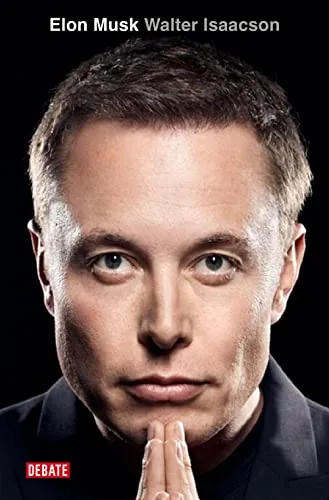
Cover of Elon Musk
Bestseller
Memoirs & biographies

Elon Musk

★★★★☆ No ratings 1 min read

Isaacson shadowed Musk for two years with access to meetings, factories, family and adversaries, and the book inherits both the virtues and the problems of that proximity.

Affiliate CTA preview · enabled with monetization (phase 5).

For two years Isaacson shadowed Musk through meetings, factories and decisions, with access to his family, collaborators and adversaries. The result documents the industrial method Musk applies at Tesla and SpaceX — question every requirement, delete parts before optimising them, integrate manufacturing — alongside a pattern of erratic behaviour that has destroyed value as much as created it. Isaacson leaves the central question open: whether the drives that make that pace of innovation possible can be separated from those causing the recurring crises.

Our review

Isaacson shadowed Musk for two years with access to meetings, factories, family and adversaries, and the book inherits both the virtues and the problems of that proximity. The best of it is the documentation of the industrial method: Musk subjects every design requirement to interrogation — who asked for it, why, what happens if we delete it — before letting anyone optimise it, because he considers optimising an unnecessary part the commonest form of engineering waste. Isaacson shows that algorithm applied on Tesla's production line and in SpaceX's rocket development, with results verifiable in cost per launch. The worst of it is that Isaacson does not clearly separate the method from the temperament. The book documents episodes of cruelty, impulsive decisions and self-inflicted crises — the Twitter acquisition takes up a long section — yet suggests, without demonstrating, that the two are inseparable. That is a thesis, not a finding, and readers should treat it as such. Even so, it is the most complete available source on how two of the most consequential industrial companies of the past decade work from the inside.

Who it's for

For readers wanting to understand the engineering method at Tesla and SpaceX; less suited if you want a critical assessment of the man separated from his legend.

Key takeaways

  • Musk deletes requirements before optimising parts: the biggest waste is making something unnecessary well.
  • Isaacson suggests Musk's excesses are inseparable from his execution, but does not prove it.
  • Full access yields exceptional operational detail and, simultaneously, little critical distance.
  • The Twitter section is the clearest example of value destruction documented in the book.
Fact

Published in 2023, with the Spanish edition from Debate (736 pages); Isaacson shadowed Musk for two years before writing it.