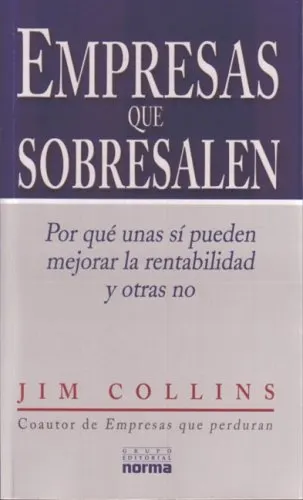
Cover of Good to Great
Bestseller
Corporate finance

Good to Great

Why Some Companies Make the Leap...And Others Don't

★★★★½ 8.0/10 (4) 1 min read

Jim Collins and his research team spent five years sifting through 1,435 companies to identify eleven that had made the leap from mediocre to exceptional sustained performance — and to isolate what distinguished them from closely matched peers that did not make the same transition.

Affiliate CTA preview · enabled with monetization (phase 5).

Jim Collins and his research team studied companies that made the leap from good to great — delivering shareholder returns three times the market for fifteen consecutive years — and identified what differentiates them: Level 5 Leadership, the Hedgehog Concept, a culture of discipline, and the technology accelerator.

Our review

Jim Collins and his research team spent five years sifting through 1,435 companies to identify eleven that had made the leap from mediocre to exceptional sustained performance — and to isolate what distinguished them from closely matched peers that did not make the same transition. The findings repeatedly confound received wisdom. The most counterintuitive is the Level 5 Leader: the executives who drove the most enduring transformations were not charismatic, high-profile visionaries but individuals who combined extreme personal humility with fierce professional resolve. The "first who, then what" principle holds that durable competitive advantage begins with getting the right people on the team before setting strategy. The Hedgehog Concept — the intersection of what you can be best in the world at, what you are deeply passionate about, and what drives your economic engine — provides a more disciplined strategic decision filter than most consulting frameworks. The honest caveat is methodological: several of the companies studied experienced serious difficulties in subsequent years, which suggests the identified factors may be necessary but not sufficient conditions for lasting greatness. The book is most useful as a lens for asking better questions, not as a guarantee of outcomes.

Who it's for

For executives, board members, and founders seeking to understand what separates great organizations from good ones, approached with appropriate critical distance toward the methodology.

Key takeaways

  • Level 5 Leaders credit the team for successes and take personal responsibility for failures — the inverse of typical executive behavior.
  • Companies that made the leap hired the right people first and determined strategy second, not the other way around.
  • The Hedgehog Concept filters opportunities through three questions: what can we be best in the world at, what are we passionate about, and what drives our economic model?
  • Disciplined focus on a few things executed exceptionally well consistently outperforms unfocused diversification.
Fact

Published in 2001, the study examined the stock performance of 1,435 companies over 40 years to identify the eleven that met the criteria for the good-to-great transition.

Topics Jim Collinsliderazgo nivel 5concepto del erizoexcelencia empresarialinvestigación