The Innovators
Isaacson wrote this book as a correction to his own earlier work.
Affiliate CTA preview · enabled with monetization (phase 5).
Isaacson wrote this book as a correction to his own earlier work.
Affiliate CTA preview · enabled with monetization (phase 5).
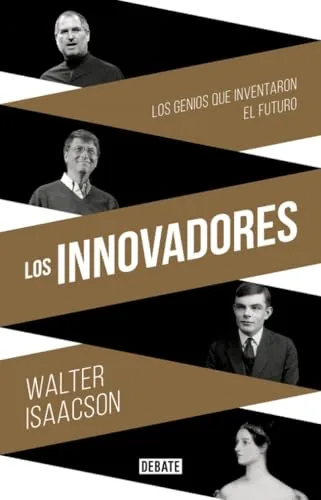
A collective history of the digital revolution, from Ada Lovelace in the 1840s through to Google. Isaacson's thesis is that almost no decisive innovation — the computer, the transistor, the microchip, the internet — came from an isolated genius, but from teams combining technical vision with execution, often with public funding during the most uncertain phases. The book is a useful counterweight to the lone-founder narrative that dominates much contemporary business writing.
Isaacson wrote this book as a correction to his own earlier work. After two biographies of solitary geniuses — Jobs and Einstein — he argues here that almost no decisive innovation of the digital age came from an isolated mind. The narrative runs from Ada Lovelace, who in the 1840s intuited that a calculating machine could manipulate symbols and not merely numbers, through to Google, by way of the Bell Labs transistor, ENIAC, the microchip, ARPANET and the personal computer. In each case Isaacson identifies the same pattern: a conceptual idea, a team able to turn it into engineering, and a funding source that tolerated uncertainty — frequently the state, at the stage no private investor would enter. The argument is solid and well documented, though the book loses narrative tension in its second half, as the story nears the present and the author must choose among too many protagonists. As a counterweight to the visionary-founder narrative dominating contemporary business writing, it remains the best popular work available.
For readers wanting a rigorous history of the digital revolution who distrust the lone-genius myth; less suited if you want business-model analysis.
FactThe Spanish edition was published by Debate in 2014 (656 pages); the narrative opens with Ada Lovelace in the 1840s.