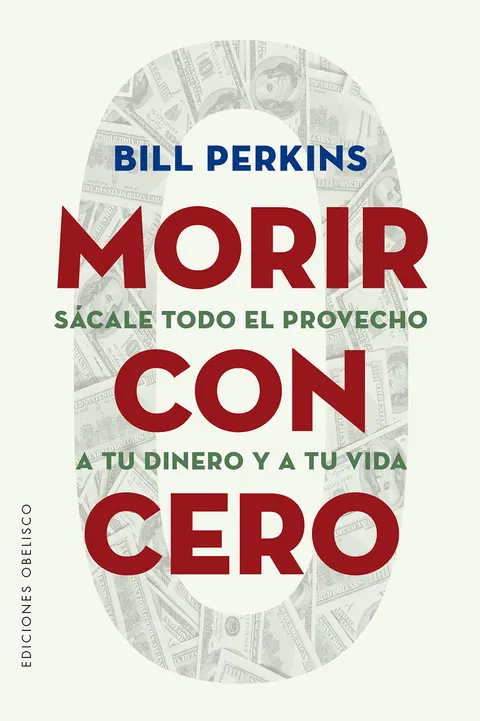
Die With Zero
Sácale todo el provecho a tu dinero y a tu vida
Die With Zero is the most provocative personal finance book of recent years, and its provocation is genuinely useful.
Affiliate CTA preview · enabled with monetization (phase 5).
Sácale todo el provecho a tu dinero y a tu vida
Die With Zero is the most provocative personal finance book of recent years, and its provocation is genuinely useful.
Affiliate CTA preview · enabled with monetization (phase 5).
Bill Perkins proposes a radical thesis: the optimal financial goal is not to accumulate as much money as possible but to spend it all before you die, maximizing life experiences when you can enjoy them most. A challenging counterpoint to orthodox FIRE philosophy that forces readers to balance saving and living.
Die With Zero is the most provocative personal finance book of recent years, and its provocation is genuinely useful. Bill Perkins starts from a premise that most financial manuals ignore: the goal is not to accumulate the largest possible net worth but to maximise life experiences while one has the health and energy to enjoy them. The thesis is not a call to financial irresponsibility — Perkins advocates planning and saving — but a critique of compulsive over-saving that leads many people to die with substantial wealth they never actually used. The book introduces useful concepts: the «memory dividend» — lived experiences generate returns in the form of memories that compound over time — «investing in experiences at the right time» — some experiences are far more valuable at 30 than at 70 — and planning inheritance transfers during life rather than posthumously. The limitations of the approach are real: the model works well for people with sufficient income and savings; for those on tight budgets, the framework is less applicable. The book is a necessary corrective to conventional financial thinking, not a universal strategy.
For readers with some financial stability who want to reconsider the balance between saving and life experiences; less applicable for those in early accumulation phases or with limited resources.
FactPublished in 2020, the book was written by Bill Perkins, a hedge fund manager and energy trader who argues his thesis from the experience of having earned — and spent — considerable fortunes.