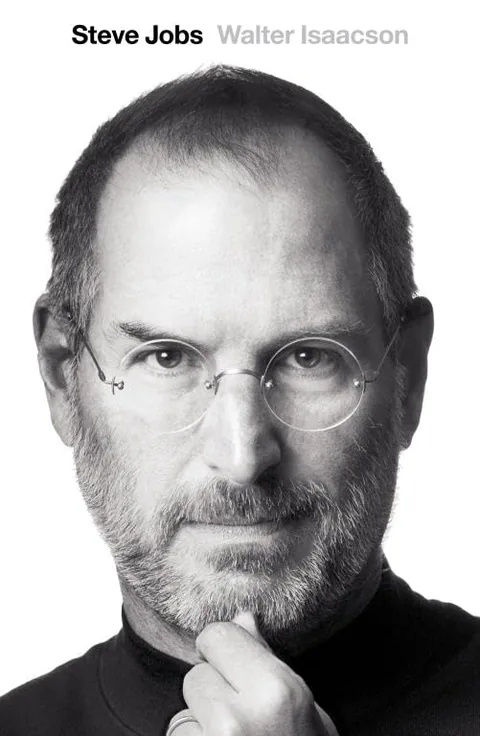
Steve Jobs
Jobs asked Isaacson to write his biography and waived, in writing, any right to read it before publication — an unusual concession.
Affiliate CTA preview · enabled with monetization (phase 5).
Jobs asked Isaacson to write his biography and waived, in writing, any right to read it before publication — an unusual concession.
Affiliate CTA preview · enabled with monetization (phase 5).
The only biography written with Jobs's cooperation, based on more than forty interviews with him over two years and around a hundred conversations with family, friends, competitors and colleagues. Isaacson does not soften his subject: he documents the cruelty, the reality distortion field and the erratic decisions alongside the product intuition that rebuilt Apple. For readers interested in the company rather than the myth, the value lies in how vertical hardware-software integration, control of the user experience and Apple's enduring margins connect.
Jobs asked Isaacson to write his biography and waived, in writing, any right to read it before publication — an unusual concession. It defines the book: Isaacson had full access for two years and used it to document both the product intuition and the cruelty, the mistreatment of colleagues, and the medical decisions that likely shortened his subject's life. For readers interested in the company, the most useful element is not the psychology but the strategic coherence Isaacson reconstructs without underlining it: Apple integrated hardware, software and later content distribution because Jobs believed the user experience could not be delegated to third parties. That decision, taken when the entire industry bet the other way, is what explains the margins Apple has sustained ever since. The book has an unavoidable flaw of perspective: it was published weeks after Jobs's death, amid collective mourning, and its final section yields to the hagiography Isaacson avoids elsewhere. Read it alongside the accounts of those who worked with him and fared worse.
For readers wanting to understand vertical integration as a strategic decision, not merely a character trait; less suited if you want a balanced portrait of the man.
FactBuilt on more than forty interviews with Jobs across two years and around a hundred conversations with family, friends, competitors and colleagues.